A software handover is not complete when the new team receives a repository, a password vault, and a two-hour architecture call. Those are inputs. The real test is whether the incoming team can identify the exact system running in production, operate it without the former supplier, recover it after failure, and release a small change without guessing.
That distinction matters because a clean-looking codebase can still be operationally unowned. The domain may sit in a former contractor's account. Production may be built from an unknown commit. A green backup job may have no usable restore path. A harmless merge may trigger a migration, a bot commit, or an automatic production rollout nobody documented.
This guide provides a 30-day takeover sequence for product owners and incoming engineering teams. It is designed for live SaaS products, internal business applications, customer portals, and other custom systems that cannot simply be paused while a new team learns them.
The 30 days are a planning frame, not a universal completion promise. A small, documented application may move faster. A multi-repository system with regulated data, unclear ownership, or failed backups may need containment before it is safe to accept.
If the former developer or agency is already unreachable and there is no cooperative handover to manage, start with the first-72-hours recovery runbook. It covers immediate containment, authorized evidence preservation and provider-specific recovery limits before this 30-day acceptance sequence begins.
If you are still deciding whether to acquire the product rather than accepting an already-agreed handover, begin with the small-SaaS technical due diligence guide. It maps the deal thesis to source, production, data, rights, providers, AI dependencies and transition evidence before this operational acceptance sequence starts.
The standard for “taken over”
Use five evidence states for every critical item:
| Status | What it actually means |
|---|---|
| Requested | The access, file, explanation, or action has been requested. |
| Received | Something was delivered, but it has not been compared with the live system. |
| Verified | The item has been checked against an authoritative account, runtime, database, or provider. |
| Rehearsed | The incoming team has independently performed the action in a safe environment. |
| Accepted | The evidence meets the agreed criterion and the business owner has accepted any remaining risk. |
This prevents a common reporting failure: writing “backup received” when nobody has restored it, or “deployment documented” when the incoming team has only watched the outgoing developer deploy.
The takeover is operationally complete only when the incoming team can, without relying on the former supplier:
- identify what is running and which source revision produced it;
- stop or control production releases and destructive automation;
- diagnose the most important failure modes;
- restore the critical data and supporting control plane;
- build, test, release, observe, and roll back a small change;
- explain the known risks, support boundaries, and next priorities to the business owner.
The rest of this checklist turns those outcomes into a practical sequence.
Before day 1: define the transition, not just the technical audit
Start with a one-page transition charter. It should name the business decision owner, the outgoing transition lead, the incoming technical lead, the exact services and environments in scope, and the date when the old contract ends. That contract-end date is not automatically the date when the new team accepts production responsibility.
Also define:
- who may merge, deploy, migrate data, rotate credentials, restore a backup, and approve rollback;
- the overlap window in which the outgoing team must answer questions;
- support hours and the real emergency boundary—do not imply 24/7 coverage by accident;
- a freeze or controlled-change window during the transfer;
- the evidence required for acceptance and who may accept residual risk;
- a secure channel for credentials, separate from the handover document.
This is not project-management ceremony. It prevents the incoming team from inheriting unlimited responsibility for a system it has not yet been allowed to inspect.
Days 1–3: establish ownership and access continuity

The first map is organizational, not architectural: who owns each account, who can recover it, and what depends on it.
Build an account inventory before rotating or revoking anything. For each service, record the exact organization, tenant, project, or account—not simply “GitHub” or “AWS.” Include:
- source control organizations and repositories;
- cloud, hosting, container registry, and server accounts;
- domain registrar, DNS, certificates, CDN, and email delivery;
- database, object storage, queues, cache, and search services;
- error tracking, logs, metrics, uptime checks, and alert routing;
- analytics, CRM, payment, messaging, and other business integrations;
- CI/CD identities, GitHub Apps, deploy keys, bots, runners, webhooks, and OAuth applications;
- billing owner, renewal contacts, recovery email or phone, MFA method, and backup recovery owner.
The goal is client-controlled continuity. Guest access inside a supplier-owned account is not equivalent to ownership. Critical organizations should have at least two named, client-controlled owners, plus recovery methods that do not depend on a former developer's personal email, phone, laptop, or authenticator.
Assign the least privilege needed for each task. GitHub's own documentation separates read, triage, write, maintain, and admin roles because admin access includes sensitive and destructive actions. A new team does not need permanent organization-owner access merely to inspect a repository; it does need a documented route for obtaining authorized elevated access when a transfer requires it. See GitHub's repository role guidance.
Do not revoke the old team blindly
Early mass revocation can cause an outage if a personal deploy key, runner, billing method, or OAuth application is still part of the production path. Use this order:
- inventory human and machine identities;
- identify dependencies and recovery paths;
- establish client-owned replacements;
- test the replacements;
- rotate shared or potentially copied secrets;
- revoke outgoing access in dependency order;
- confirm that releases, jobs, alerts, and provider callbacks still work.
Never store secret values in the inventory itself. Record the secret's name, owner, purpose, storage location, rotation status, and dependent systems.
Days 2–7: prove the source-to-production baseline
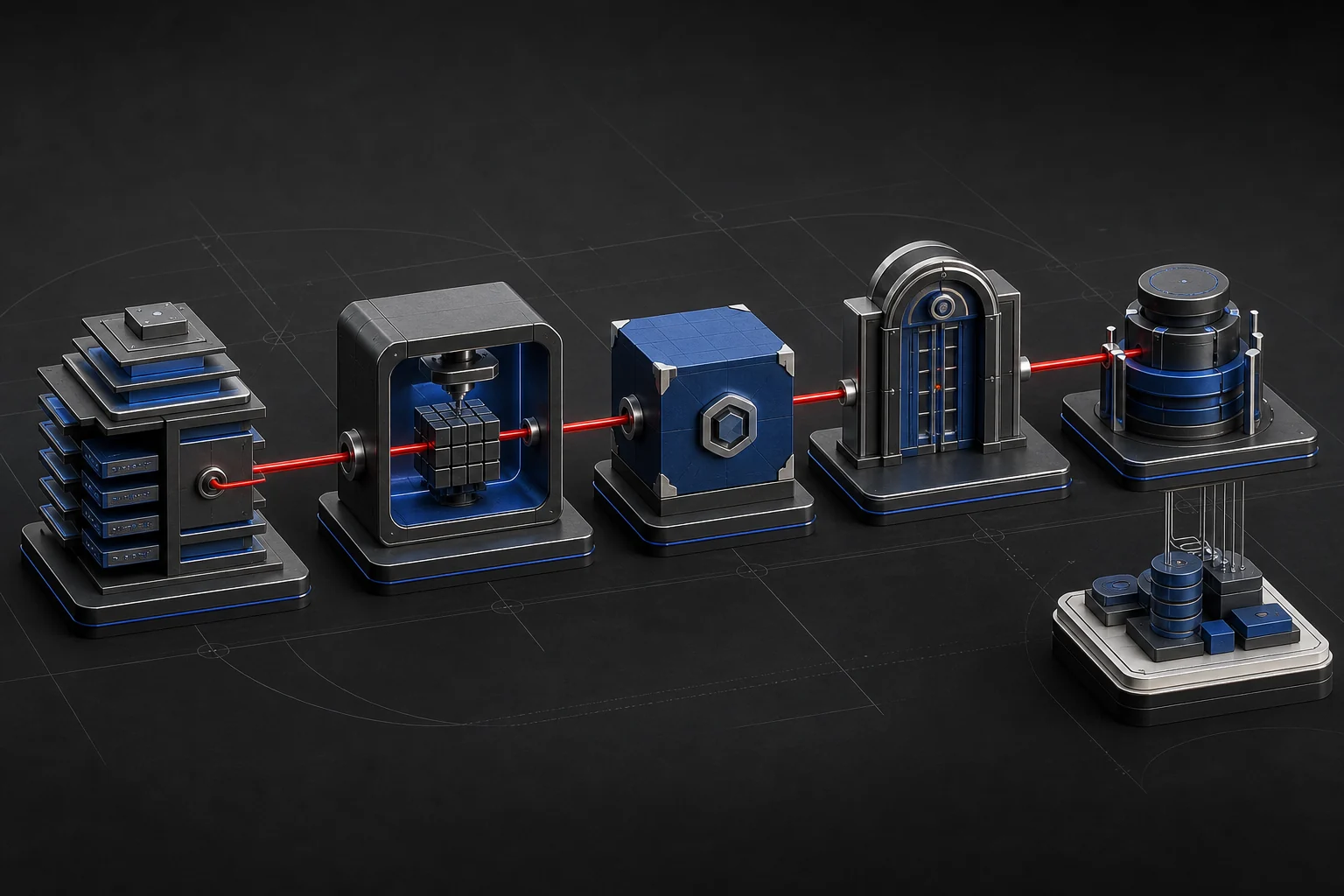
A repository is authoritative only when it can be traced to the workload and schema the business is actually using.
The most important technical question is not “Do we have the code?” It is “Can we prove which code, configuration, and schema produced the current behavior?”
Trace this chain:
source organization → repository and history → protected revision or tag → CI run → immutable build artifact → deployment revision → running workload → runtime configuration schema → database migration state → observed business behavior
For a smaller application, several links may live in one platform. The evidence still matters. Record the current commit SHA, framework and runtime versions, lockfile, build command, artifact or deployment ID, environment configuration names, database migration status, and a small set of production behaviors that can be observed without modifying data.
A ZIP archive, a local folder without Git history, or a container tagged latest does not prove the baseline. If the running version cannot be mapped back to accessible source, label it unverified baseline. The team can continue discovery, but the first production change should be a no-go until an authorized owner explicitly accepts the risk and a containment plan exists.
Transfer the repository as a system
Preserve more than the default branch:
- full Git history, branches, tags, releases, and large-file objects;
- issues, pull requests, review findings, and unresolved decisions;
- branch protection, required checks, environments, and approvals;
- workflow permissions, variable and secret names, deploy keys, apps, webhooks, and runners;
- package or container registry links and artifact retention;
- the infrastructure or GitOps repository that actually deploys production.
Then reproduce the build in a controlled environment. Capture every undocumented dependency: a private package, local certificate, paid build tool, generated client, missing environment variable, or compiler version that exists only on someone's laptop.
Google's release-engineering guidance emphasizes repeatable builds, identifiable versions, tested release artifacts, staged rollout, and rollback because reliable operation depends on the full path from source to deployment—not just source control. See the Google SRE chapter on release engineering.
Reconcile the database separately
Do not assume that ORM models or a migrations folder describe production. Compare three things:
- repository migration history;
- the database's migration ledger;
- the actual production schema.
Look for manual SQL, edited migrations that were already applied, emergency db push operations, hotfix tables, untracked stored procedures, and background jobs that depend on old columns. Define one approved future path for schema changes and document whether application rollback remains compatible after a migration.
Days 4–10: map the release trigger graph and runtime topology
A modern deployment can cross several repositories and providers. Before the first test commit, map:
human action → source event → CI build → artifact registry → bot or cross-repository update → GitOps reconciliation → migration or job → runtime side effects
Ask which pushes, tags, merges, manual workflows, or dependency updates touch staging or production. Check whether GitOps auto-sync, pruning, self-healing, scheduled jobs, or provider webhooks can change live state during the transition. The incoming team must know how to suspend an unsafe rollout without destroying the desired state.
Inventory everything that executes, not only the web server:
- API and frontend services;
- queue producers and consumers;
- cron and scheduled provider jobs;
- webhook receivers and outgoing callbacks;
- migration, import, backfill, repair, and reset scripts;
- email, payment, invoicing, reporting, and reconciliation workers;
- manual operator queues and spreadsheet fallbacks.
For each process, document replicas, concurrency, retry behavior, idempotency, timezone, missed-run behavior, shutdown handling, owner, and how failures become visible. A scheduler embedded in the application may run once per replica. Increasing the web deployment from one replica to three can therefore send three emails, run three reconciliations, or charge the same operation multiple times unless duplicate safety is proven.
At this stage, compare the architecture diagram with live provider inventories and telemetry. A beautiful diagram is still only a claim until the runtime confirms it.
Days 7–14: prove recovery, not just backup creation
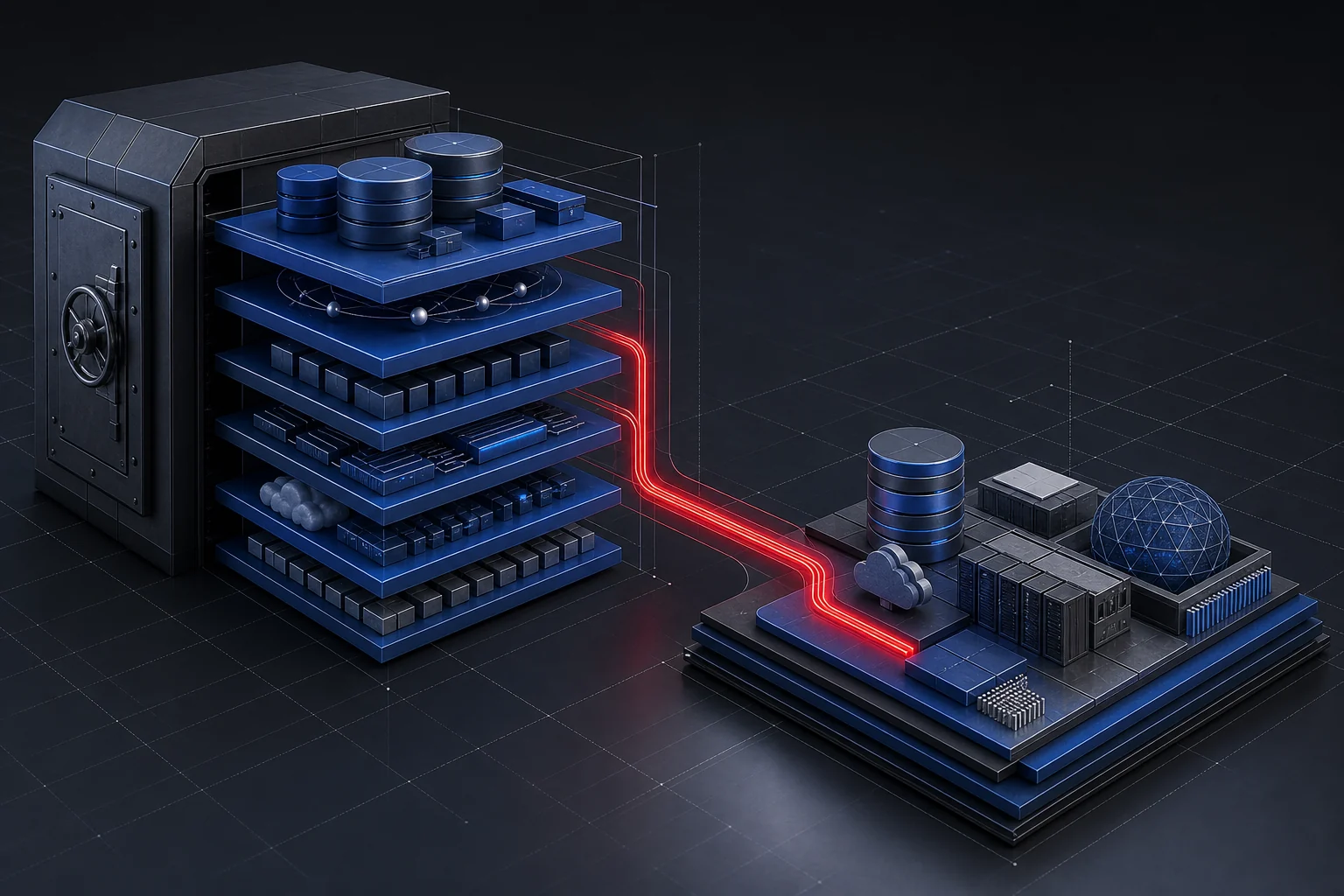
Recovery requires a coordinated set. A database dump alone may not restore a usable service.
“Backups are green” is not an acceptance criterion. A successful backup job proves that a process ran; it does not prove that the incoming team can restore the business function.
First define the business recovery targets:
- RPO: how much recent data loss the business can tolerate;
- RTO: how long the critical function may be unavailable;
- restore order for the most important functions;
- acceptable manual or degraded operation during recovery;
- the person authorized to declare recovery and return to normal operation.
Then identify the complete recovery set. Depending on the system, it may include the database and write-ahead logs, object storage, encryption keys, schema and migrations, durable queue state, source repositories, build definitions, artifacts, infrastructure manifests, DNS, certificates, email and webhook configuration, and current access-recovery identities.
Perform an isolated restore. Do not overwrite production, and prevent the restored environment from sending real emails, payment requests, webhooks, or customer notifications. Validate more than “the application opens”:
- key user and administrative flows;
- database referential integrity and tenant separation;
- files and object links;
- decryption using the correct key versions;
- scheduled jobs and queues in a contained state;
- the measured restore time and the actual recovery point;
- a documented way to reconcile data when returning to normal.
AWS's reliability guidance explicitly recommends periodic recovery to verify backup integrity and process, rather than relying on backup status alone. See AWS Well-Architected Reliability Pillar. Google's SRE launch checklist likewise treats backup/restore, disaster recovery, monitoring, repeatable releases, and staged rollout as connected production-readiness concerns, not isolated tasks. See the Google SRE Launch Coordination Checklist.
Days 10–18: assess risk in the order that affects the business

Triage by operational consequence and uncertainty, not by which code looks ugliest.
Do not begin with a rewrite estimate. First classify what would prevent safe operation or change.
Priority 0: control and continuity blockers
- no authoritative repository or production revision;
- no ability to stop or identify production deployment automation;
- cloud, DNS, source, or billing controlled by one supplier-owned account;
- unknown privileged access that cannot be revoked or rotated;
- incomplete recovery set or no successful isolated restore for critical data;
- active incidents, financial queues, customer commitments, or deadlines nobody owns;
- no legal or contractual right to operate or modify a material component.
These do not always mean “shut the service down.” They mean do not accept the takeover or make the first production change until the business owner approves a specific containment decision.
Priority 1: high-impact operational gaps
- a release cannot be rolled back safely;
- database migrations and production schema disagree;
- authentication, authorization, secrets, or exposed administrative routes show material risk;
- failed jobs, backups, or provider errors are invisible;
- recurring payments, emails, imports, or scheduled work can duplicate;
- production support depends on one undocumented person or device.
Priority 2: maintainability and delivery friction
- outdated but currently supported dependencies;
- low test coverage outside the most critical flows;
- confusing module boundaries;
- slow local setup or build;
- incomplete developer documentation;
- recurring manual work with a bounded workaround.
Priority 2 can be expensive, but it should not displace a Priority 0 ownership or recovery gap merely because refactoring is more familiar engineering work.
Use established security frameworks as coverage checks, not as badges. The NIST Secure Software Development Framework provides a common vocabulary for secure development and supplier conversations. CISA's SBOM resources help structure third-party component transparency. OWASP's operations guidance keeps incident management, environment hardening, patching, data protection, and legacy management in the same operational view.
An SBOM is useful evidence, but it is not proof that vulnerabilities are remediated, licenses are acceptable, or the deployed artifact matches the inventory. Keep the claim proportional to the evidence.
Days 15–22: turn knowledge transfer into executable runbooks
Recorded calls are helpful, but they are not the operating system for the next team. Extract the knowledge required to perform real work:
- architecture and deployment walkthrough;
- normal daily, weekly, month-end, and seasonal operations;
- the top recurring incidents and their safe first actions;
- known fragile areas and unsafe workarounds;
- rollback, restore, and lost-credential scenarios;
- support queues, provider escalation, and customer communication paths;
- open incidents, temporary fixes, expiring certificates, renewals, and manual deadlines.
Every runbook should state prerequisites, authorized role, expected result, stop condition, rollback or compensation path, evidence to capture, escalation owner, and last rehearsal date.
Use a “watch one, do one” pattern when the outgoing team is available:
- the outgoing team explains and performs the operation;
- the incoming team performs it under supervision;
- the incoming team repeats it independently in a safe environment;
- gaps become owned actions, not informal meeting notes.
Monitoring must transfer with the system. Verify that logs, errors, uptime checks, metrics, backup alerts, certificate alerts, queue age, failed scheduled work, and provider failures reach a named recipient. Send a test alert. A dashboard nobody watches is received evidence, not accepted operations.
Days 20–27: choose stabilize, modernize, or rebuild by evidence
The takeover should produce a decision, not an automatic rewrite proposal.
Use the rewrite, refactor or replatform decision model once the baseline is trustworthy. It separates seven evidence factors, critical unknowns and transition costs before selecting a modernization path.
| Path | Choose it when | First objective |
|---|---|---|
| Stabilize and maintain | Core business flows work, ownership can be established, and risk is concentrated in fixable gaps | restore safe releases, monitoring, recovery, and a controlled backlog |
| Incrementally modernize | The product remains valuable, but specific boundaries, dependencies, or infrastructure constrain change | isolate risk and replace components behind stable interfaces |
| Parallel replacement | The current system must keep operating, but the architecture or platform cannot support the required future safely | preserve continuity while replacing bounded capabilities in phases |
| Full rebuild | The existing system cannot satisfy the necessary business, security, or operating model and incremental change is demonstrably less viable | prove scope, migration, cutover, rollback, and data reconciliation before committing |
Do not compare only development estimates. Include data migration, coexistence, integrations, operational training, customer interruption, validation, rollback, and the period in which two systems must be supported.
In many inherited systems, the correct first decision is “stabilize now, decide modernization after we can measure.” That is not indecision. It separates urgent continuity risk from a longer-term architecture choice.
Days 24–30: make the first safe, reversible release
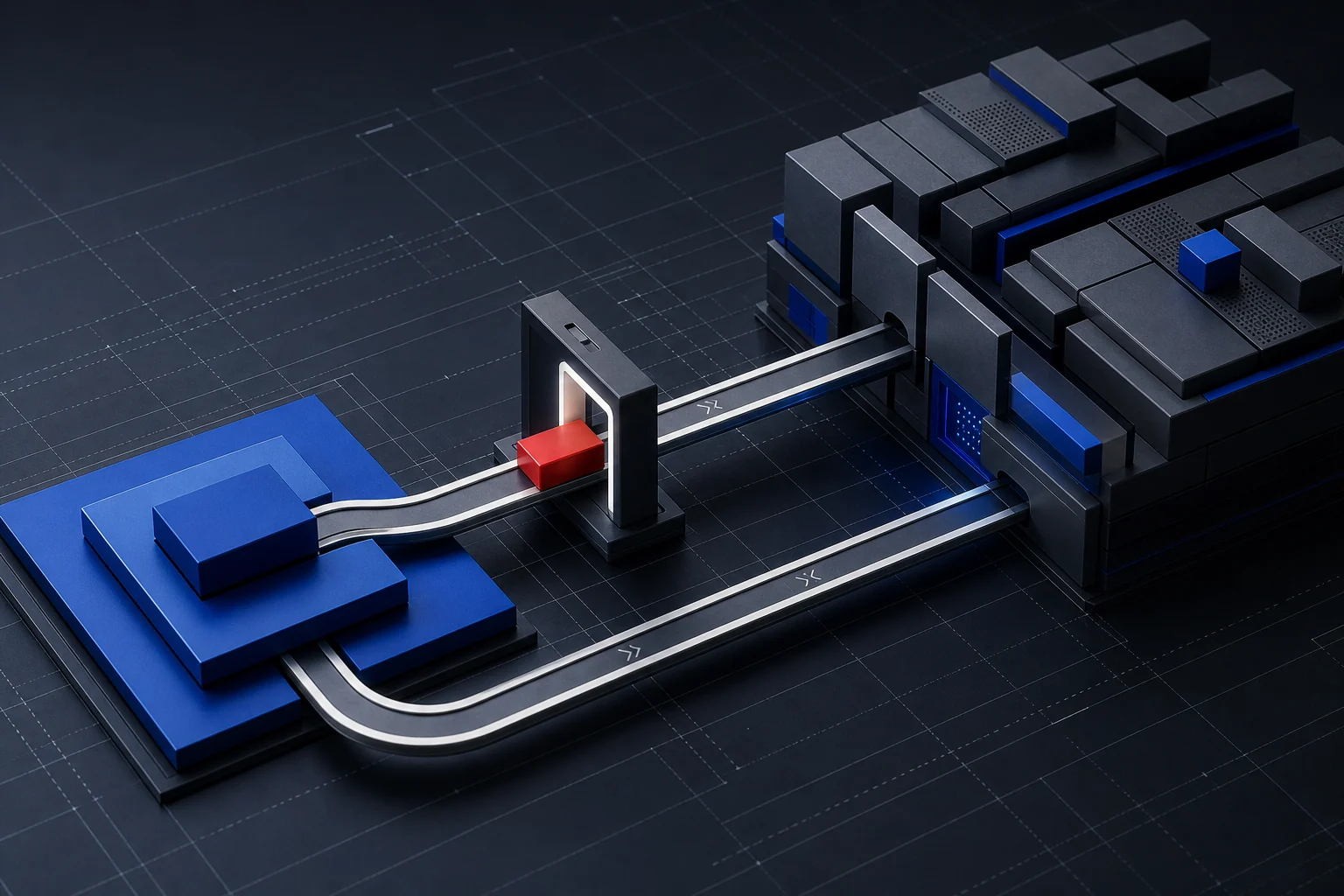
The first release is an operational test. Keep the product change intentionally small so the delivery system—not feature complexity—is what you validate.
The first production change should be deliberately boring. A copy adjustment, isolated validation improvement, or low-risk UI fix is often more useful than a large feature because the purpose is to prove the release system.
By default, the first release should not combine:
- database schema changes;
- authentication or permission changes;
- payment, invoicing, or financial logic;
- broad dependency or platform upgrades;
- irreversible data operations;
- several infrastructure changes at once.
Require:
- a reproducible build from the verified source revision and lockfile;
- the agreed automated checks plus a targeted security and dependency review;
- a staging smoke test using contained data and integrations;
- an immutable artifact or exact deployment revision;
- explicit production approval and a named rollback authority;
- a defined observation window, business smoke test, and rollback trigger;
- confirmation that telemetry identifies the released version;
- post-release reconciliation of the critical behavior—not merely an HTTP 200.
Capture the evidence while the release happens. If a step requires tribal knowledge or an undocumented local command, update the runbook before calling the release rehearsed.
The minimum takeover evidence pack
At the end of the first 30 days, the business owner should receive a concise evidence pack—not a pile of scanner exports and screenshots. Include:
- scope, outgoing and incoming leads, contract-end and acceptance dates;
- repository, rights, license, and third-party component status;
- source-to-artifact-to-runtime-to-schema evidence;
- account, admin, recovery, MFA, billing, and outgoing-access inventory;
- release trigger graph and production stop authority;
- runtime jobs, workers, queues, schedulers, and provider dependencies;
- complete recovery set, RTO/RPO, and restore rehearsal result;
- monitoring, alert routing, test-alert evidence, and incident paths;
- current risks with severity, evidence, impact, owner, correction, and verification method;
- first safe release result and rollback evidence;
- residual outgoing access and the planned revocation or rotation date;
- one explicit verdict: accepted, conditional, or no-go.
The pack should link to durable evidence locations. Do not paste credentials, tokens, personal-data exports, or raw production secrets into it.
If an enterprise customer is reviewing the inherited product, the security questionnaire response guide shows how to turn this pack into scoped claims, approval records and controlled evidence sharing without calling the takeover itself a certification.
A compact checklist for the product owner
Before accepting responsibility, ask the incoming lead to answer yes, no, or not verified:
- Do we control the source organization, cloud, domain, billing, and recovery methods?
- Can we name the exact revision and artifact running in production?
- Can the accessible source reproduce that artifact?
- Do repository migrations, the database ledger, and the actual schema agree?
- Can we stop every production release path and high-impact scheduled process?
- Can we see failures in releases, backups, jobs, integrations, and critical business flows?
- Has the incoming team restored the complete critical system in isolation?
- Can it deploy and roll back without a former employee's account, phone, or laptop?
- Are rights, licenses, third-party components, and retained supplier copies understood?
- Has the incoming team independently completed one controlled operation and one small release?
- Are the remaining risks explicitly owned, dated, and accepted by the right person?
If several answers remain “not verified,” the handover is still in progress. That is a useful result when it is visible. The dangerous state is false certainty.
What not to do during a takeover
Do not start by rewriting. You cannot design a safe replacement until you understand the current business behavior, data, integrations, and cutover obligations.
Do not treat a repository snapshot as production truth. Compare source, build, runtime, configuration, and schema.
Do not rotate every secret on the first morning. Map dependencies and establish replacement identities first, then rotate in a controlled order.
Do not merge a “test change” before mapping release triggers. A commit can initiate automation beyond the repository you are looking at.
Do not accept a backup demonstration as recovery evidence. The incoming team should perform an isolated restore and validate the critical business flows.
Do not hide unknowns inside a confidence score. Mark them as not verified, assign an owner, and explain what decision they block.
When outside takeover support is useful
An independent takeover assessment is most useful when the business must change suppliers without pausing a live product, the original developer is unavailable, account ownership is unclear, or the new team is being asked to accept support responsibility before it has production evidence.
The assessment should be bounded. Its first purpose is to establish control, identify no-go conditions, and produce a sequenced decision—not to create an open-ended audit or sell a rewrite before the facts are known.
H Product Studio's software project takeover service covers the assessment and controlled transfer of existing custom software. If ownership and the production baseline are already healthy, application maintenance services may be the more direct fit. When the system is stable enough to change but specific technical boundaries constrain the roadmap, use an application modernization plan instead.
Frequently asked questions
How long does a software project takeover take?
A small, well-documented system may be accepted in less than 30 days. A system with several repositories, unclear account ownership, regulated data, broken migration history, or untested recovery can take longer. The useful measure is not elapsed time but whether ownership, production provenance, recovery, release control, and operating knowledge have reached verified or rehearsed status.
What should a software handover include?
It should include source and history, account ownership, access and recovery identities, architecture and runtime topology, build and deployment paths, configuration and secret names, database and migration state, provider integrations, monitoring, backups and restore procedures, incident knowledge, rights and licenses, open risks, and evidence from an independent operation and release.
Is a code audit enough before changing development vendors?
No. Code quality is one layer. A safe vendor transition also depends on cloud and domain ownership, the exact production baseline, release automation, database state, machine identities, monitoring, recovery, business operations, rights, and the incoming team's ability to act without the former supplier.
Should all credentials be rotated during a handover?
Shared, personal, outgoing, or potentially copied credentials generally need rotation or revocation, but the sequence matters. Inventory dependencies, establish client-owned replacements, test them, and then rotate in an order that does not break deployments, jobs, provider callbacks, or recovery access.
When is a rewrite the right answer?
A rewrite becomes credible when evidence shows that the current system cannot satisfy the required business, security, or operating model and that incremental modernization is less viable after migration, coexistence, cutover, rollback, and support costs are included. “The code is messy” is not enough.
What is the safest first change after a takeover?
A small, observable, reversible change that does not combine schema, authentication, payments, broad dependency upgrades, or irreversible data operations. Its purpose is to prove that the incoming team can build from verified source, pass checks, deploy an exact artifact, observe the result, and roll back if required.
Written by Anna Hartung. Research reviewed against NIST SSDF, CISA SBOM guidance, GitHub access documentation, Google SRE release guidance, AWS Well-Architected reliability guidance, OWASP operations guidance, and H Product Studio's production-takeover standard. This article is engineering guidance, not legal advice; ownership, licensing, privacy, and contractual questions require project- and jurisdiction-specific review.