Project Overview
TorqueParts.pro — Performance Auto Parts Marketplace (Concept Build)
This is an internal H Product Studio concept build — a design exercise, not client work. The brand name "TorqueParts.pro", the Australian-market specificity and all interface visuals are illustrative.
The build explores a full-stack marketplace for performance and aftermarket auto parts, with Australia and New Zealand serving as the hypothetical regional frame.
The platform is treated as a product system, not a storefront skin: catalog architecture, account logic, checkout UX, editorial entry routes and a localized trust layer sketched as connected surfaces.
What it demonstrates is how structured information architecture, market-aware UX patterns and a coherent visual system would fit together in a production version.
Challenge Framing
Automotive e-commerce breaks down when catalog logic, trust signals and market localization get built as separate layers. The build puts all three inside one product direction.
Complex catalog structure
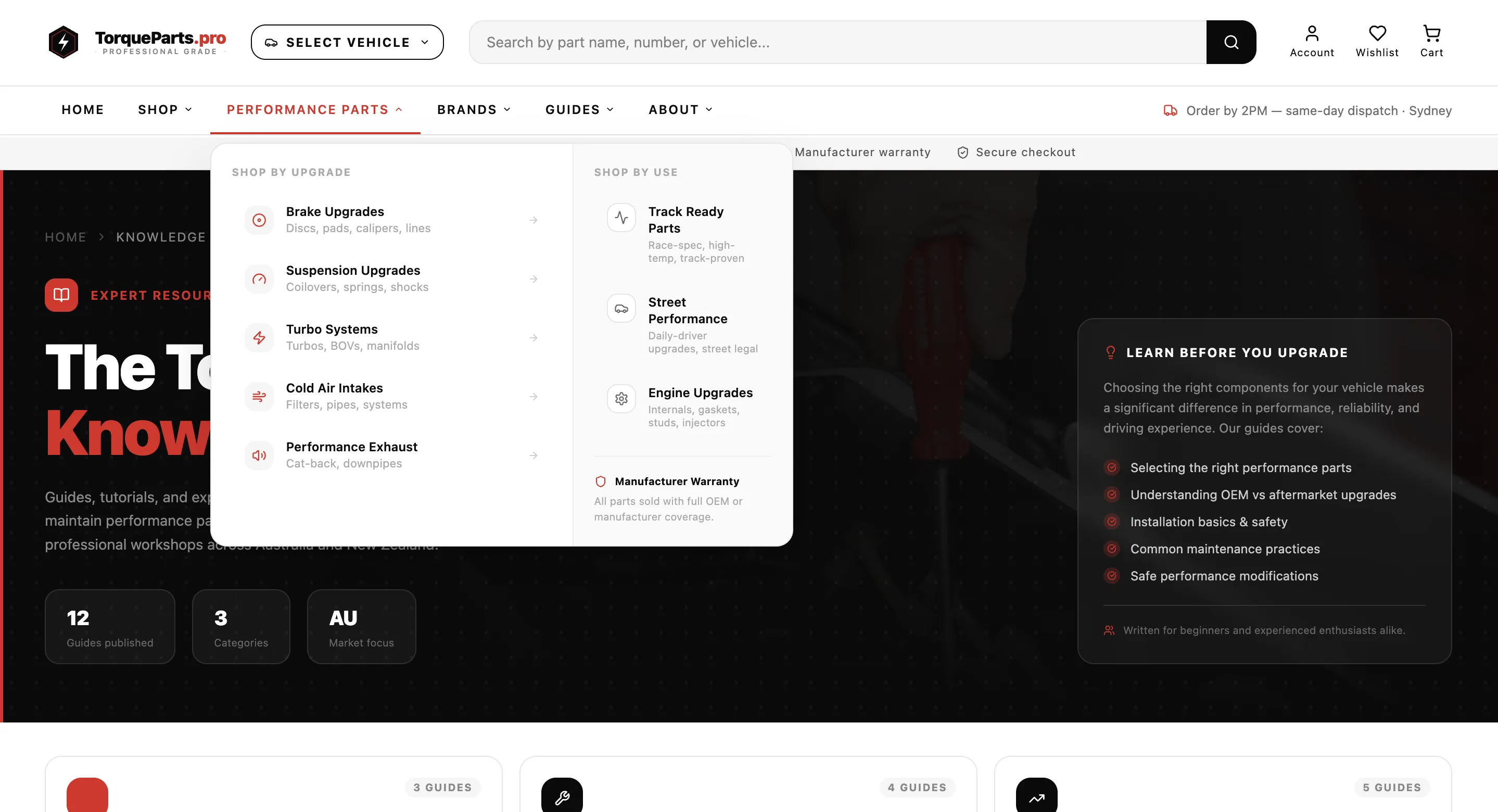
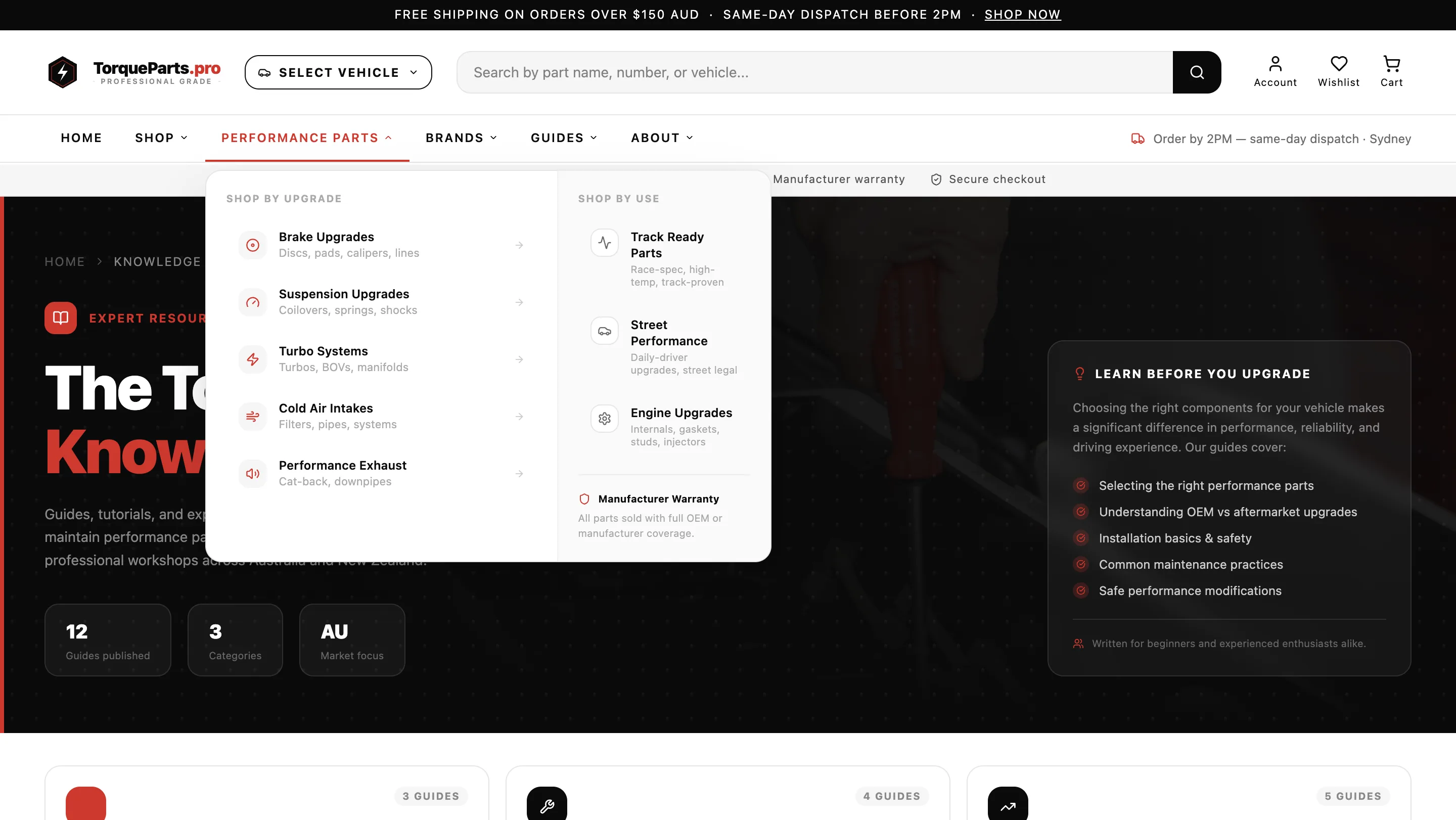
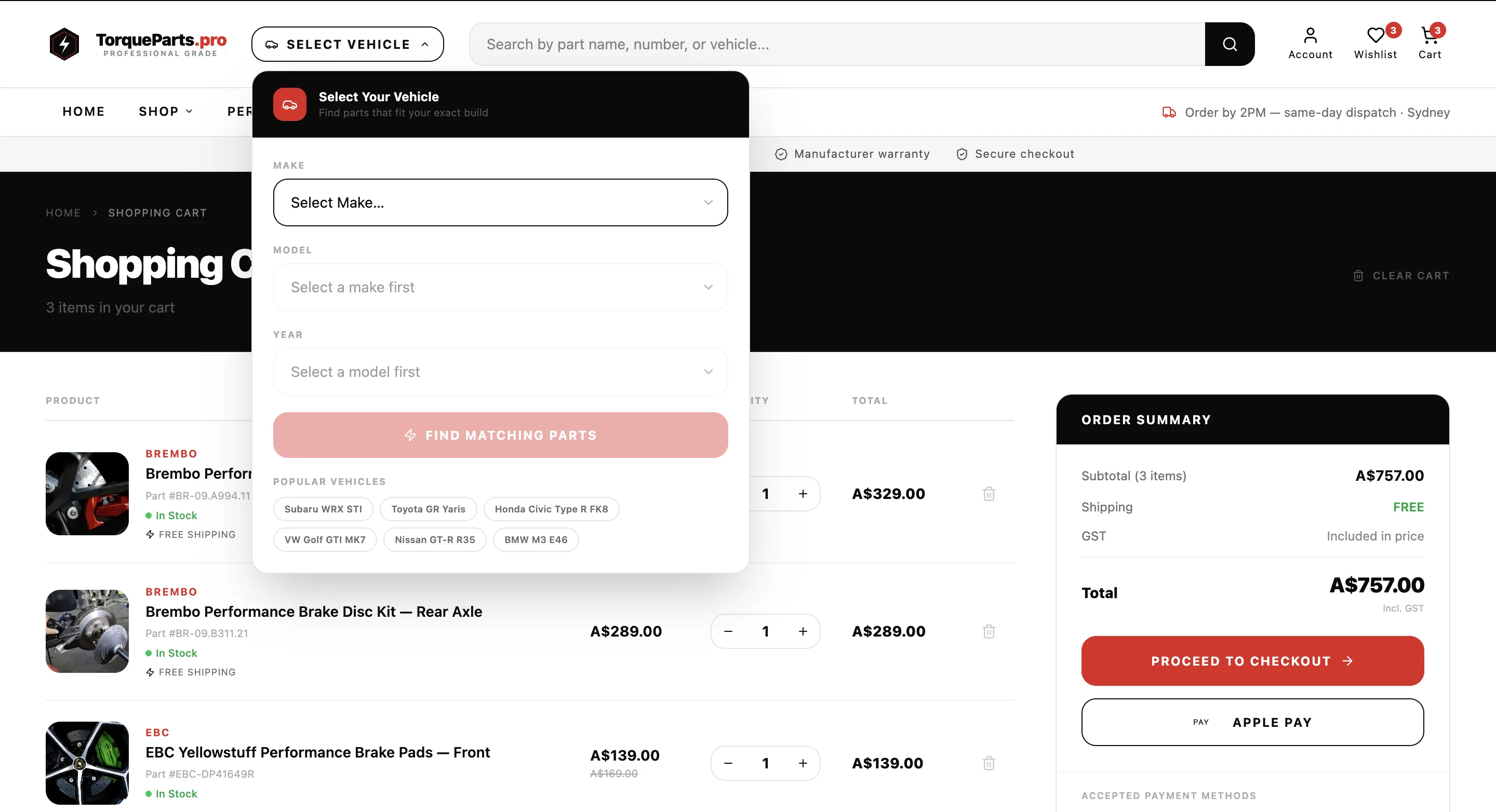
Performance parts demand clear discovery across brands, categories, fitment context and promotional entries — the build sketches a workable structure rather than a final taxonomy.
Split customer journeys
Landing traffic, shop browsing, accounts and checkout each want different UX behavior — and still have to feel like one product.
Market trust framing
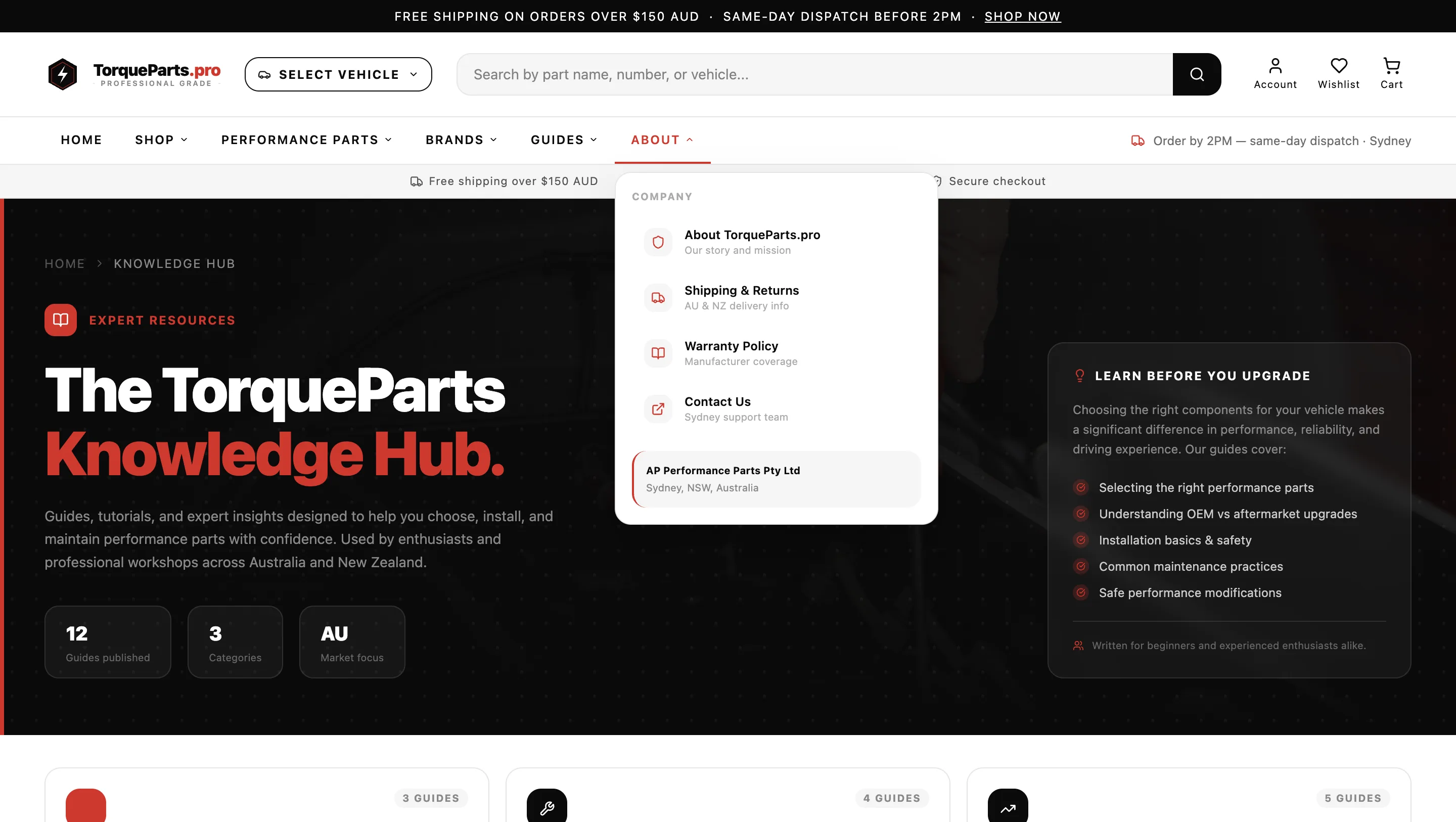
For the hypothetical AU/NZ rollout, regional details — ABN, GST context, delivery expectations, consumer-protection signals — appear as illustrative trust cues, not legal claims.
Concept Approach
TorqueParts.pro is a commerce platform designed with product-architecture discipline — the opposite of a theme-driven shop template. Everything in this section is exploratory.
Information architecture first
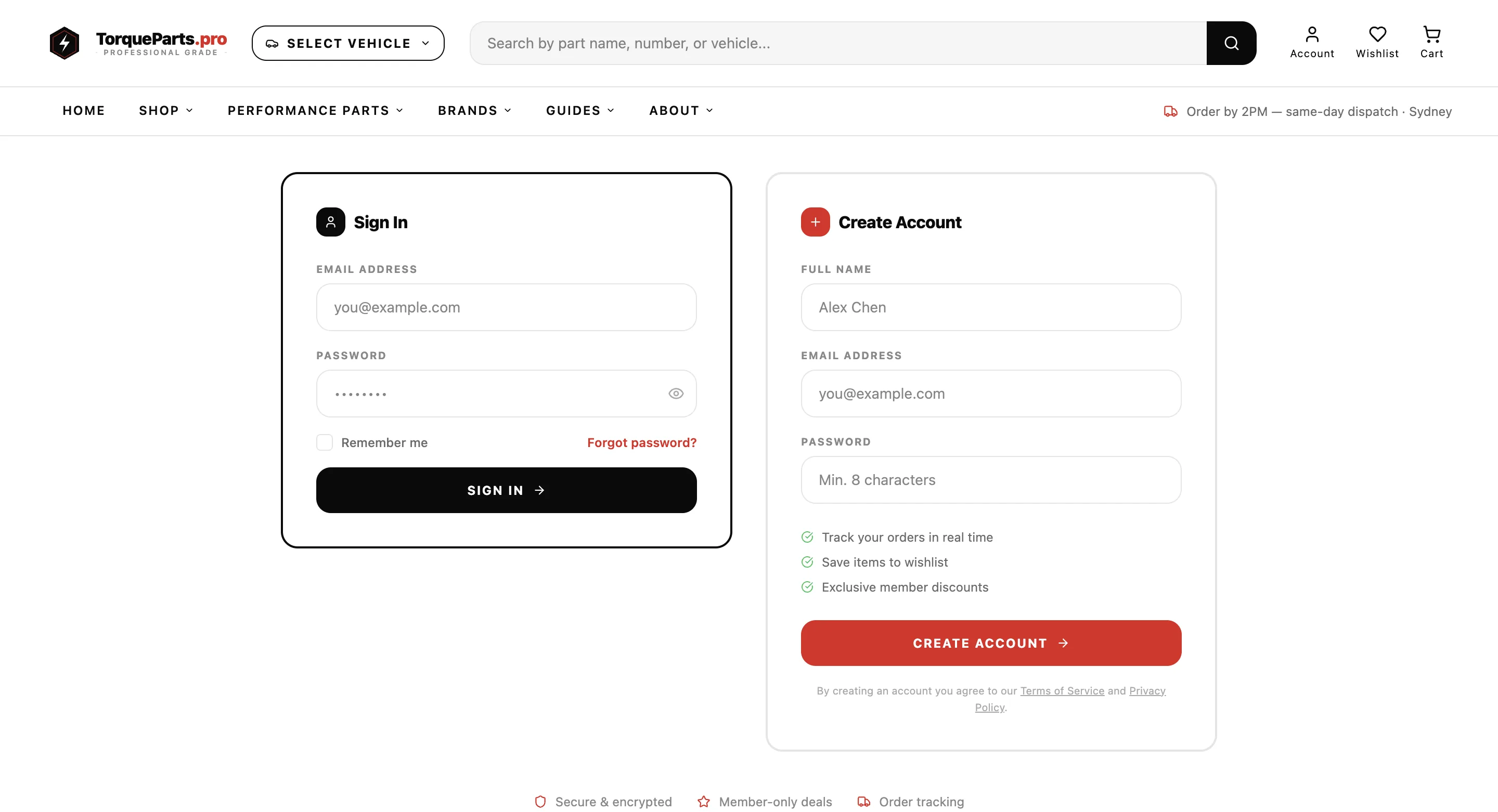
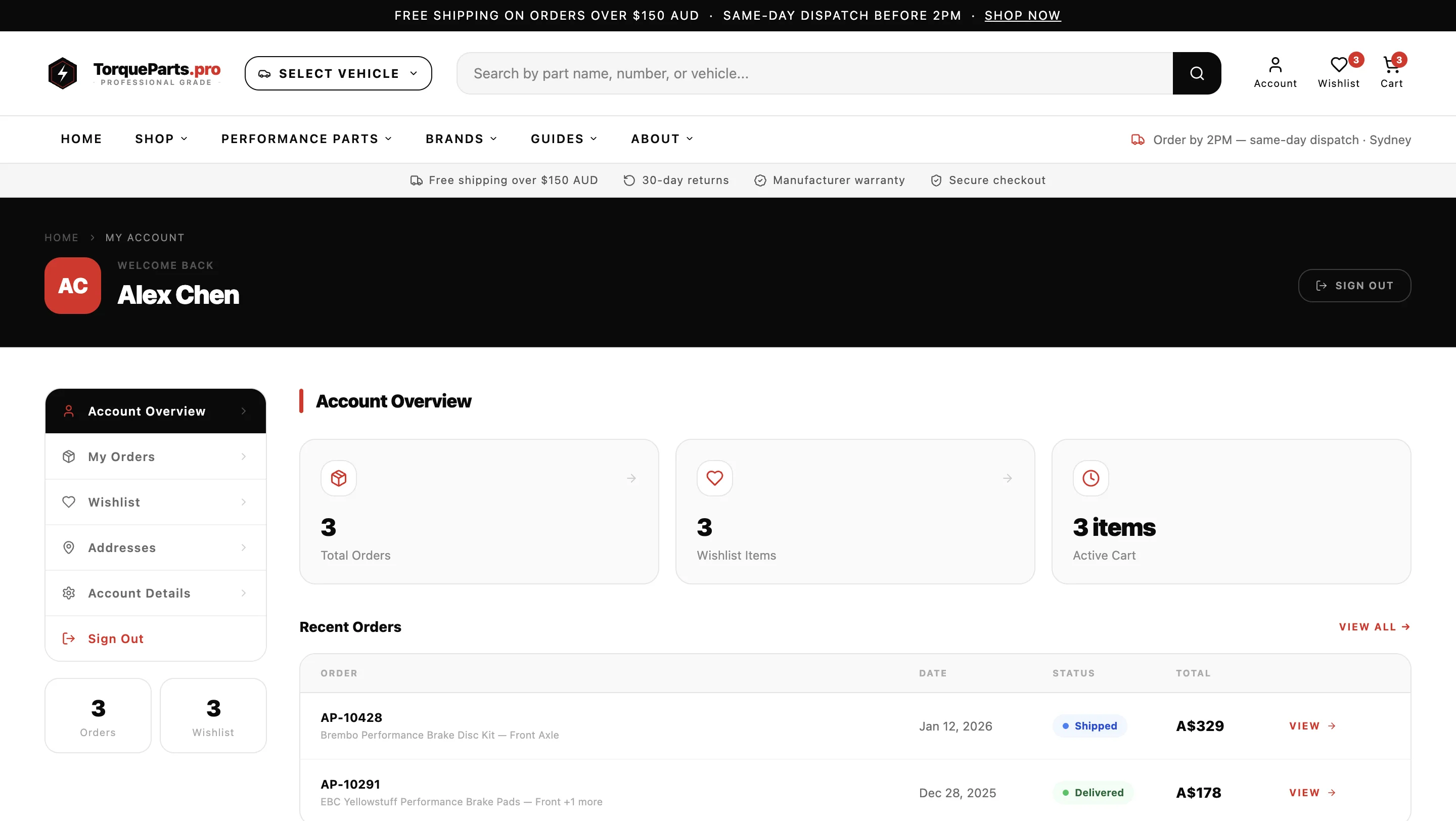
Catalog, guides, account, checkout and editorial routes are distinct product surfaces that connect — not one template stretched across every job.
Systemized design language
Tokenized spacing, rounded component logic and a performance-focused visual hierarchy replace UI-kit defaults across the interface.
Localized trust layer
Regional, payment and logistics cues are woven into the interface for the hypothetical AU/NZ audience. Nothing here is a regulatory implementation.
Platform Concept & Architecture (Exploratory)
Distinct route and layout layers carry different commercial intents inside one coherent system. The layering is illustrative, not a delivered implementation.
Key Concept Modules
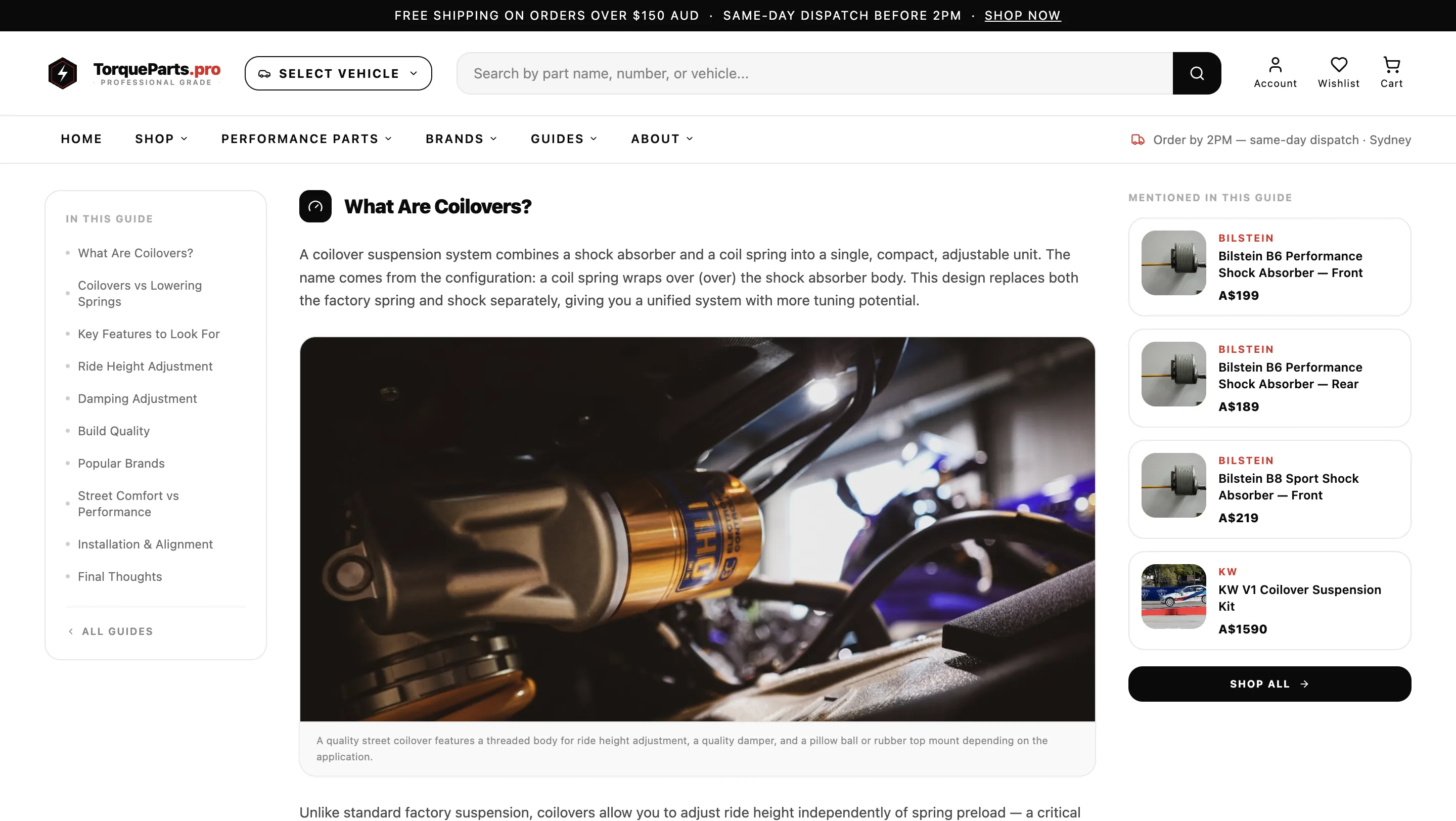
Catalog Experience
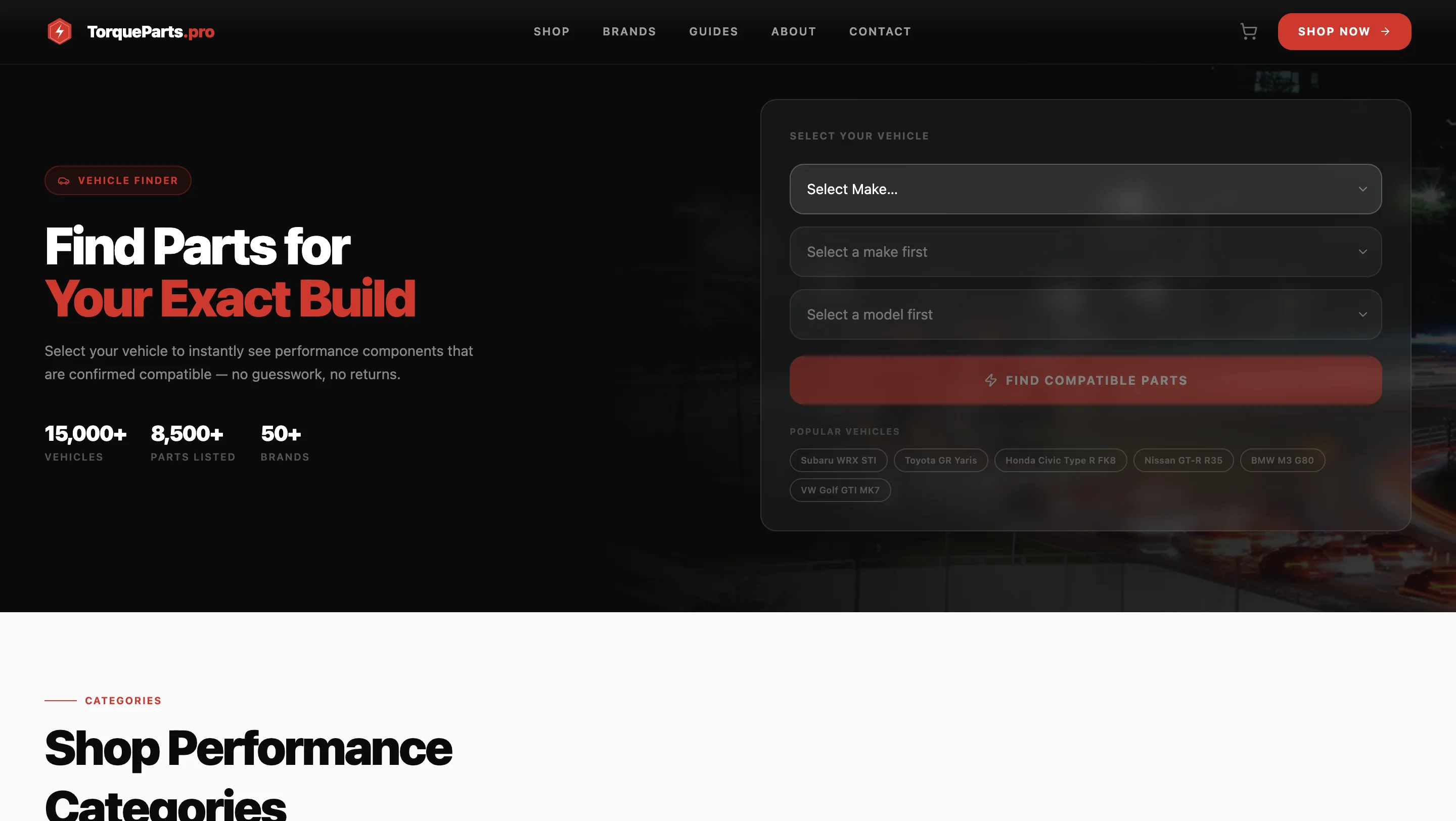
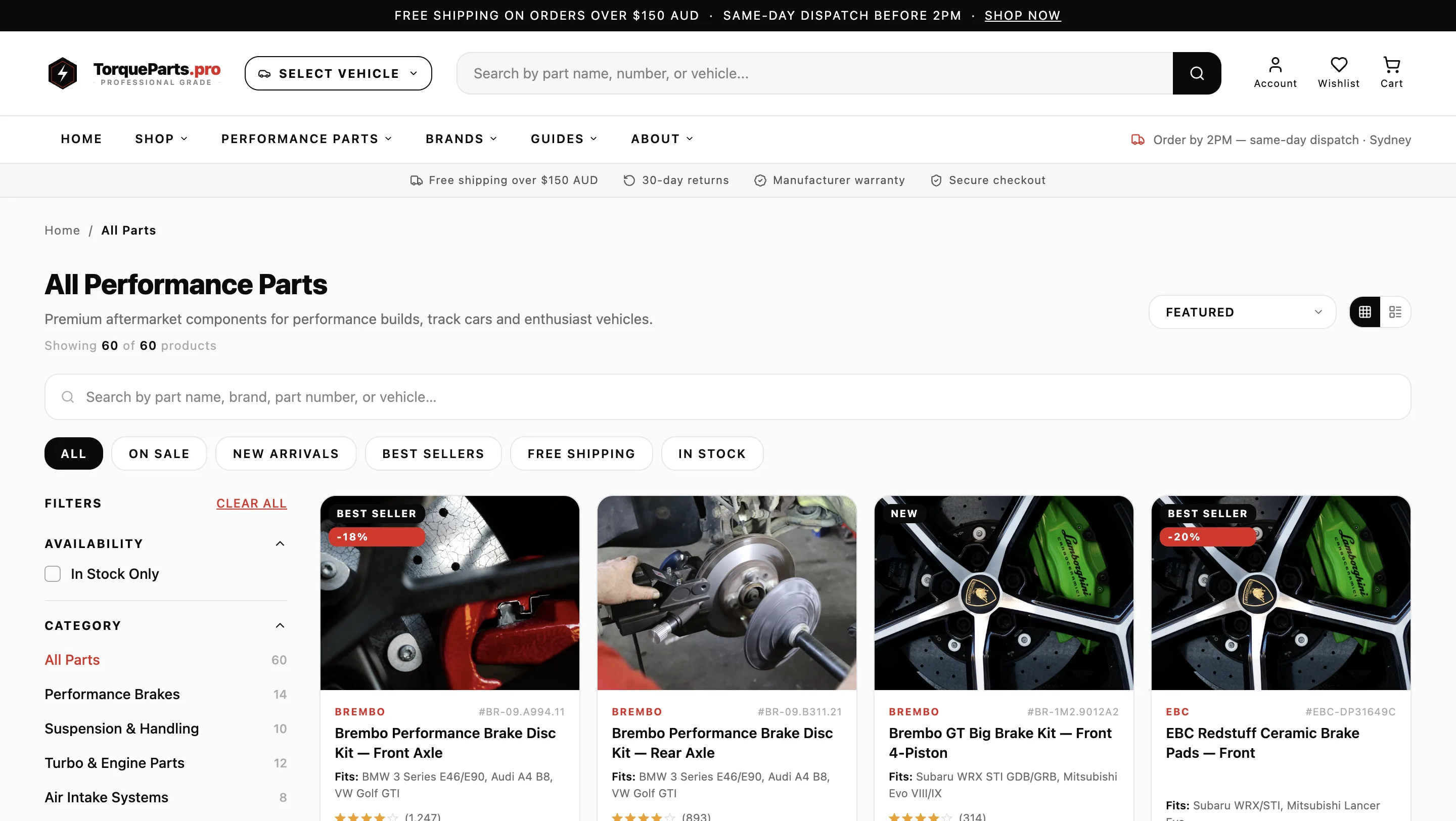
High-SKU product discovery across performance categories, brands and merchandising blocks — built to sit on a structured catalog model in a production version.
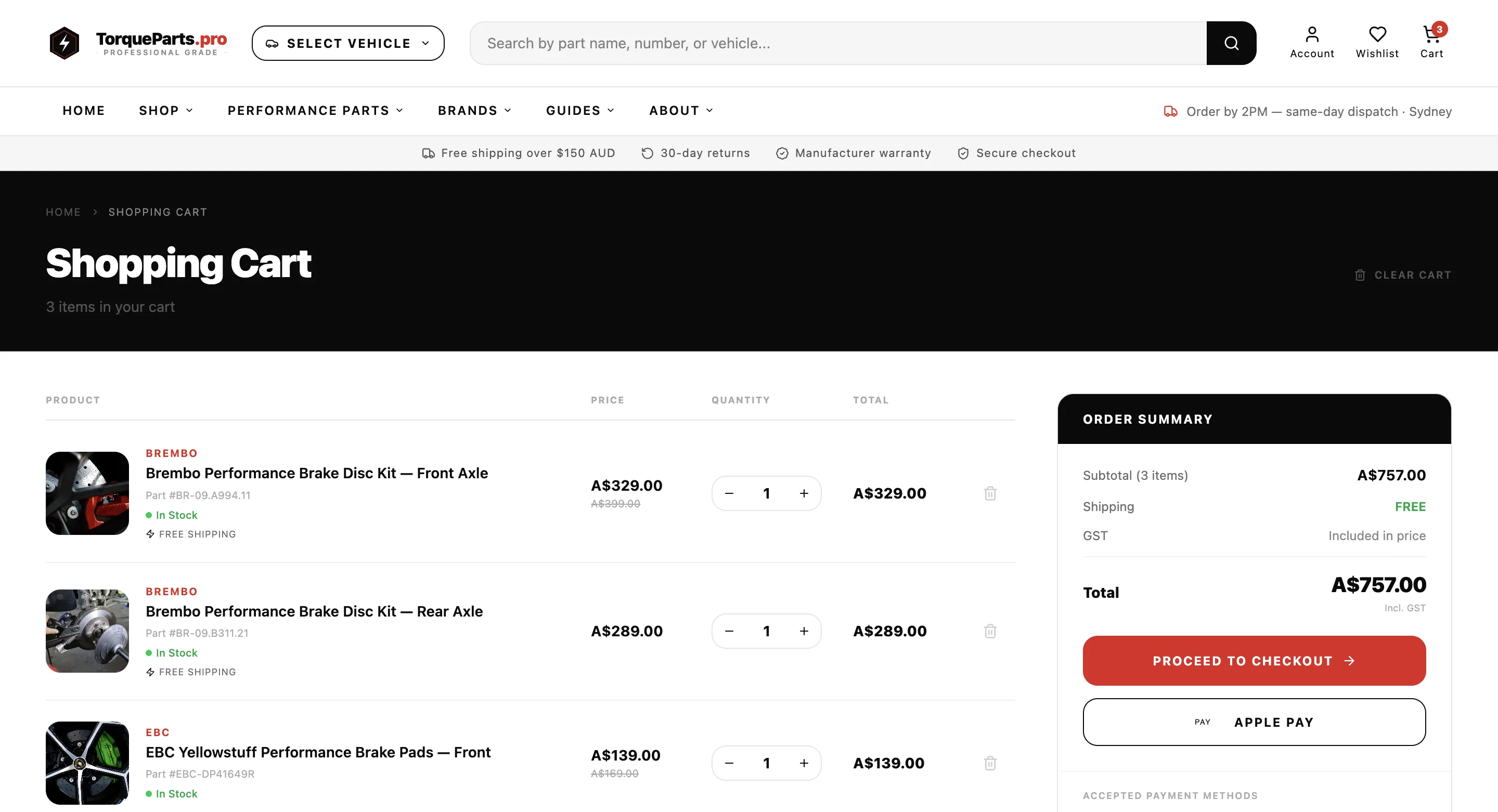
Commerce Flow
Cart, checkout and account flows treated as core product, not isolated utility screens — wired for a payment processor like Stripe in a production version.
Editorial Entry Layer
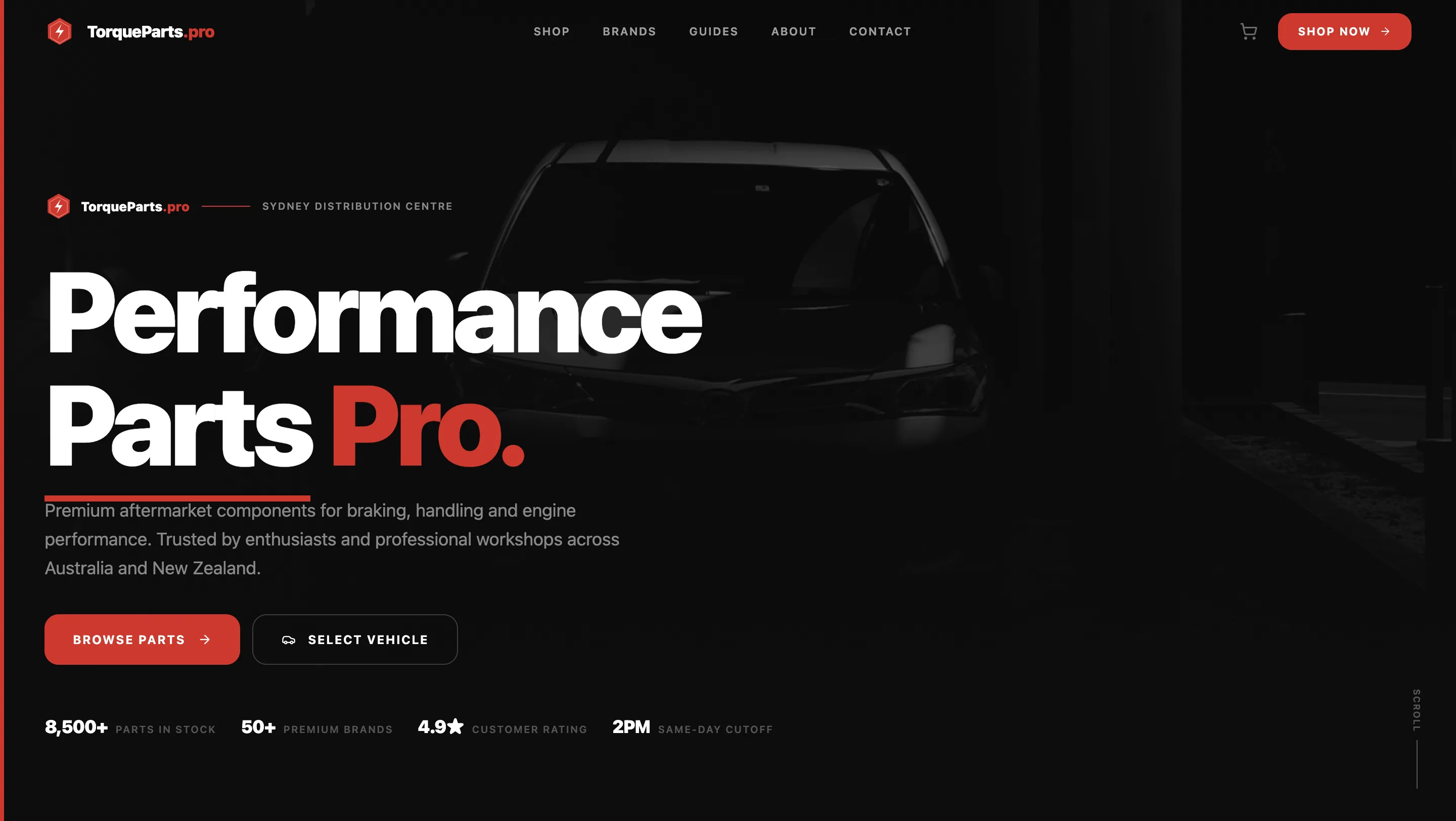
The homepage and campaign-style entries speak a separate layout language built for product storytelling and acquisition.
Market Trust Layer
Trust cues and operational signals live inside the UI so the platform feels locally legitimate. The framing is illustrative, not a regulatory implementation.
Market Framing
The scenario centers on a hypothetical Australian aftermarket, with New Zealand as the adjacent operational market. All regional references are illustrative.
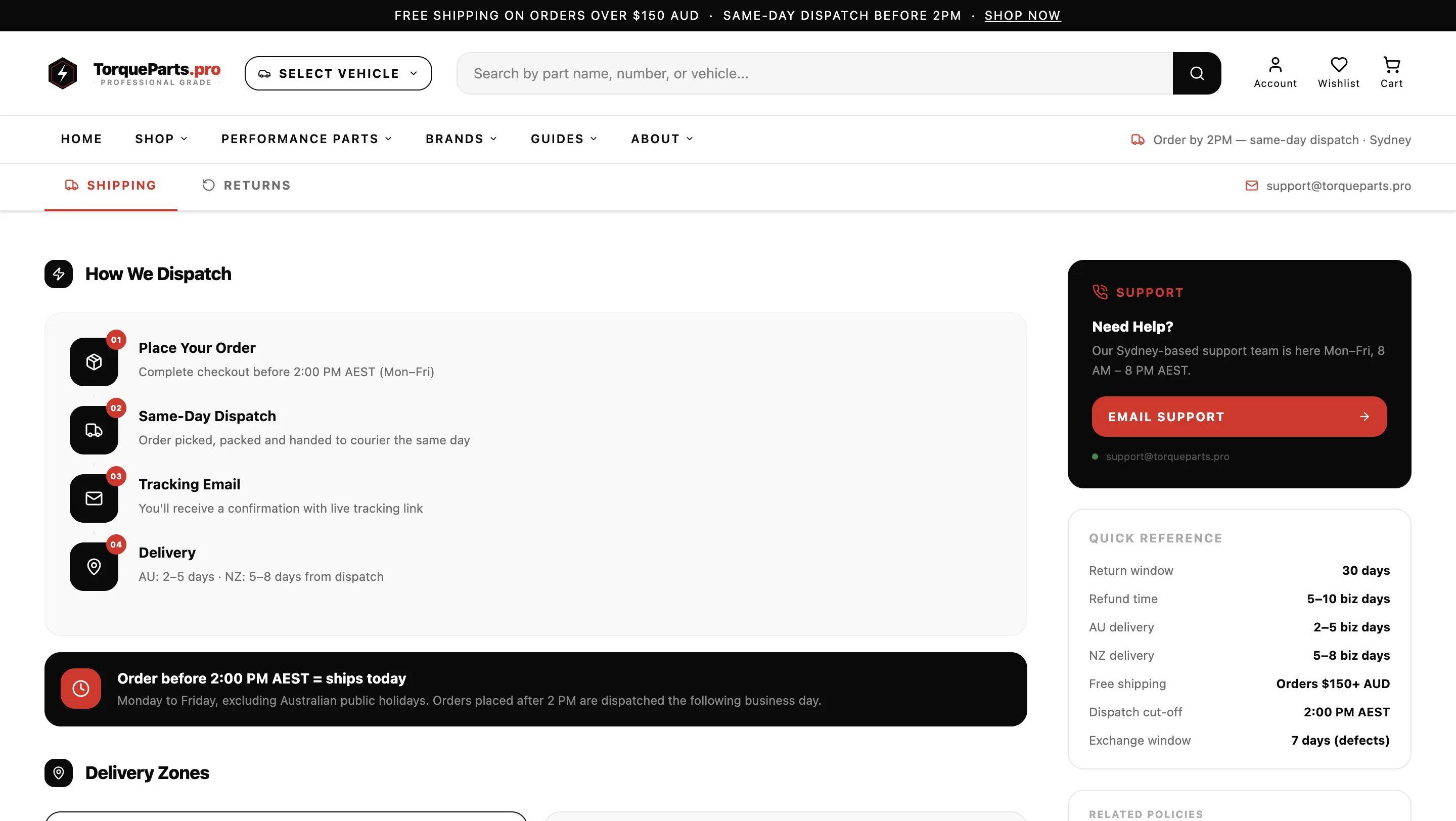
Prototype Stack
Reference Build Notes
TorqueParts.pro lands as a productized marketplace direction, clearly distinct from a generic automotive shop template — while remaining a concept study.
In one structured front-end exploration it joins catalog clarity, commerce-flow logic, editorial brand direction and a regional trust layer.
That gives a production version a cleaner base for backend expansion, search growth and operational scaling across products, accounts and orders.
Concept-build note: the brand name, Australian-market specificity, integrations and all interface visuals are illustrative. None of the listed integration points is implemented in a deployed product.
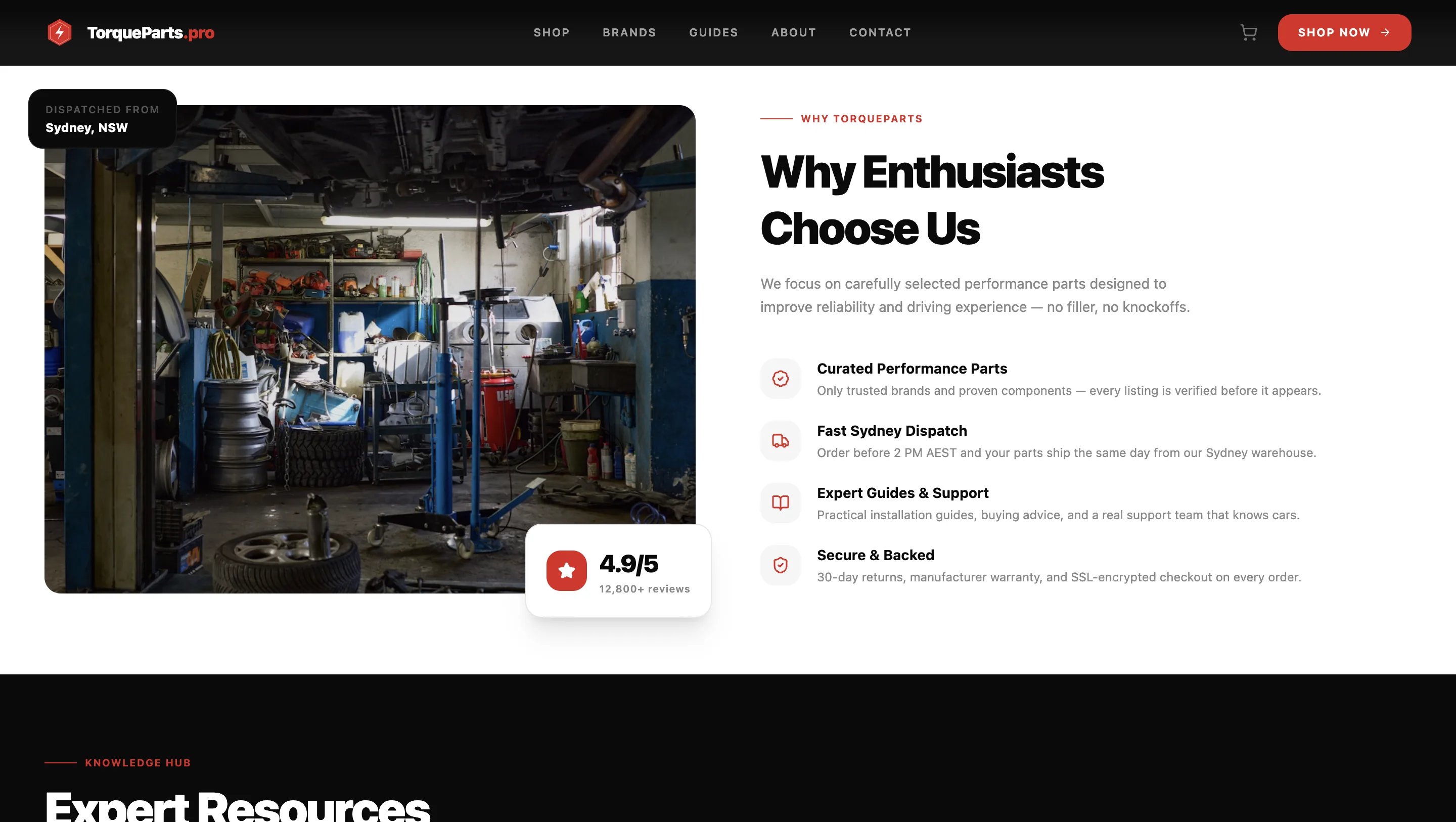
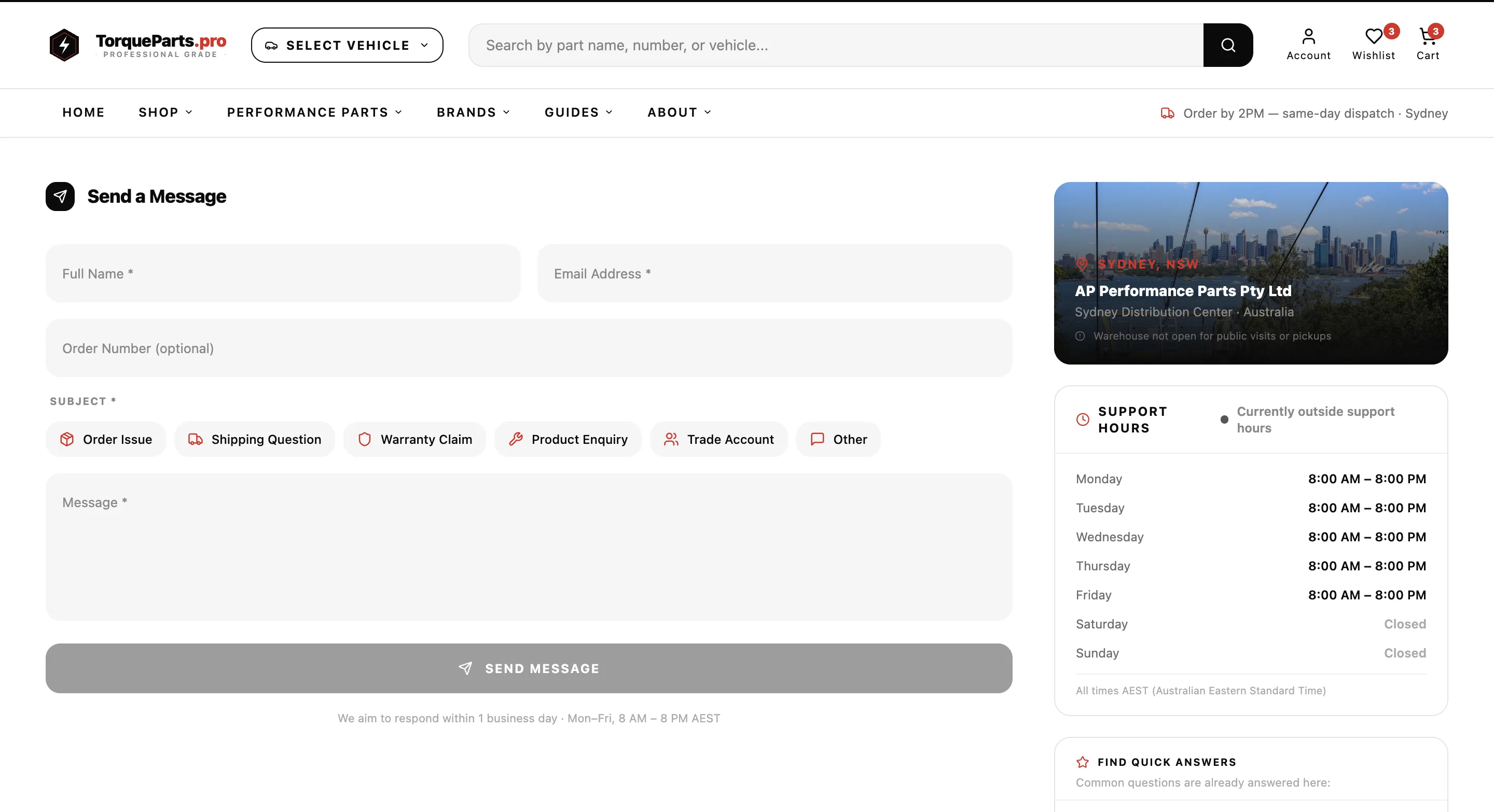
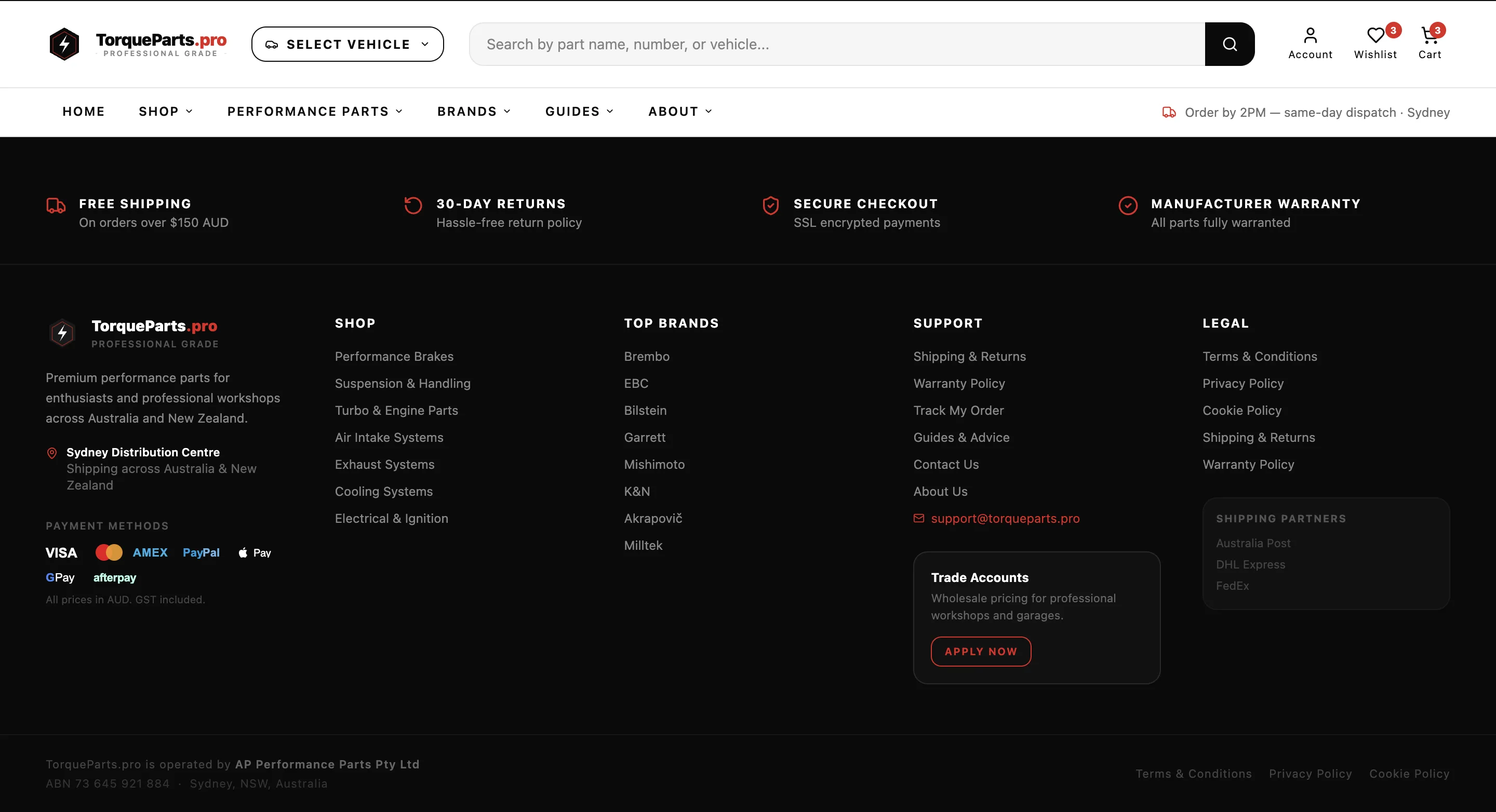
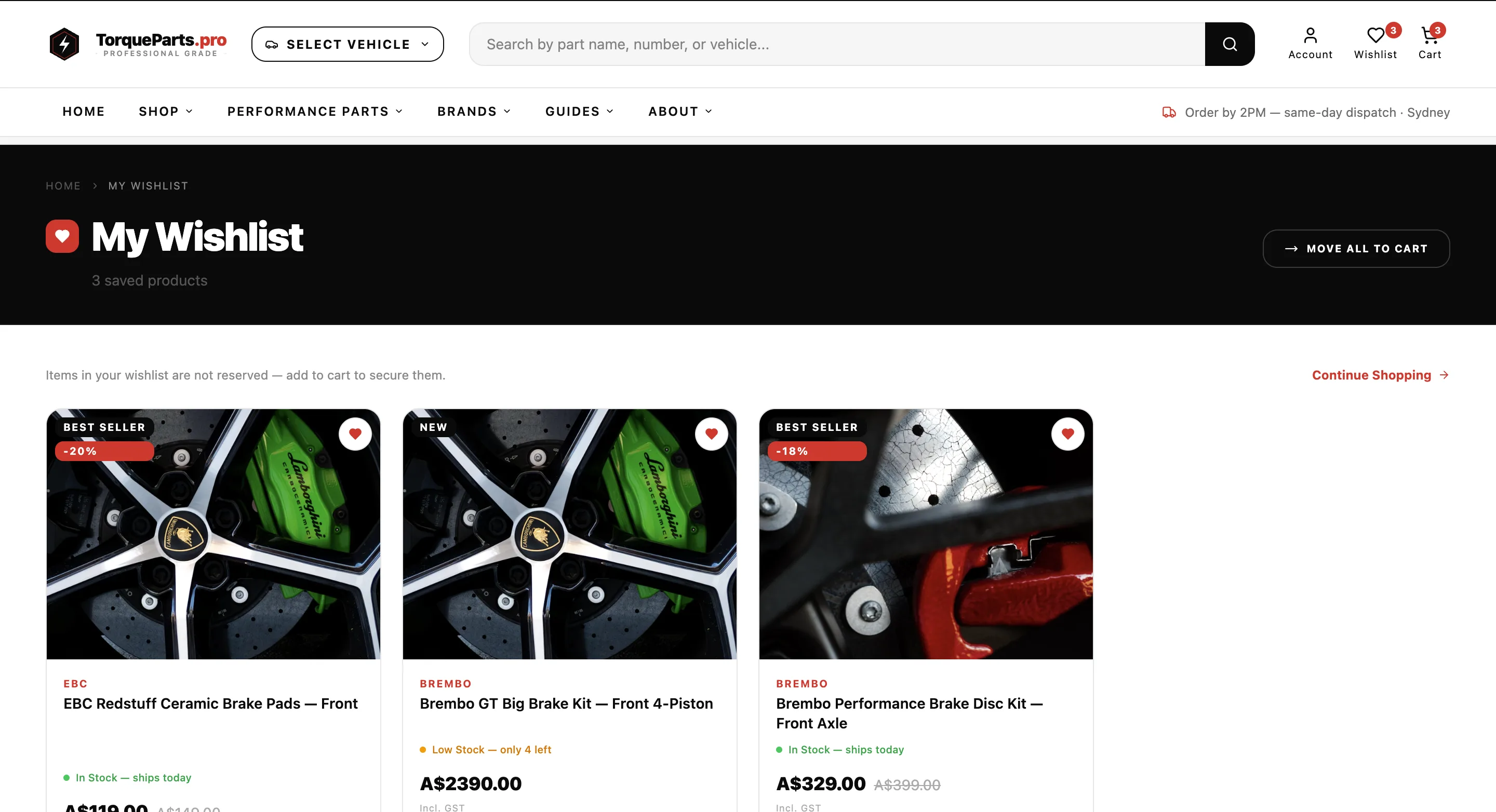
TorqueParts.pro Illustrative Gallery
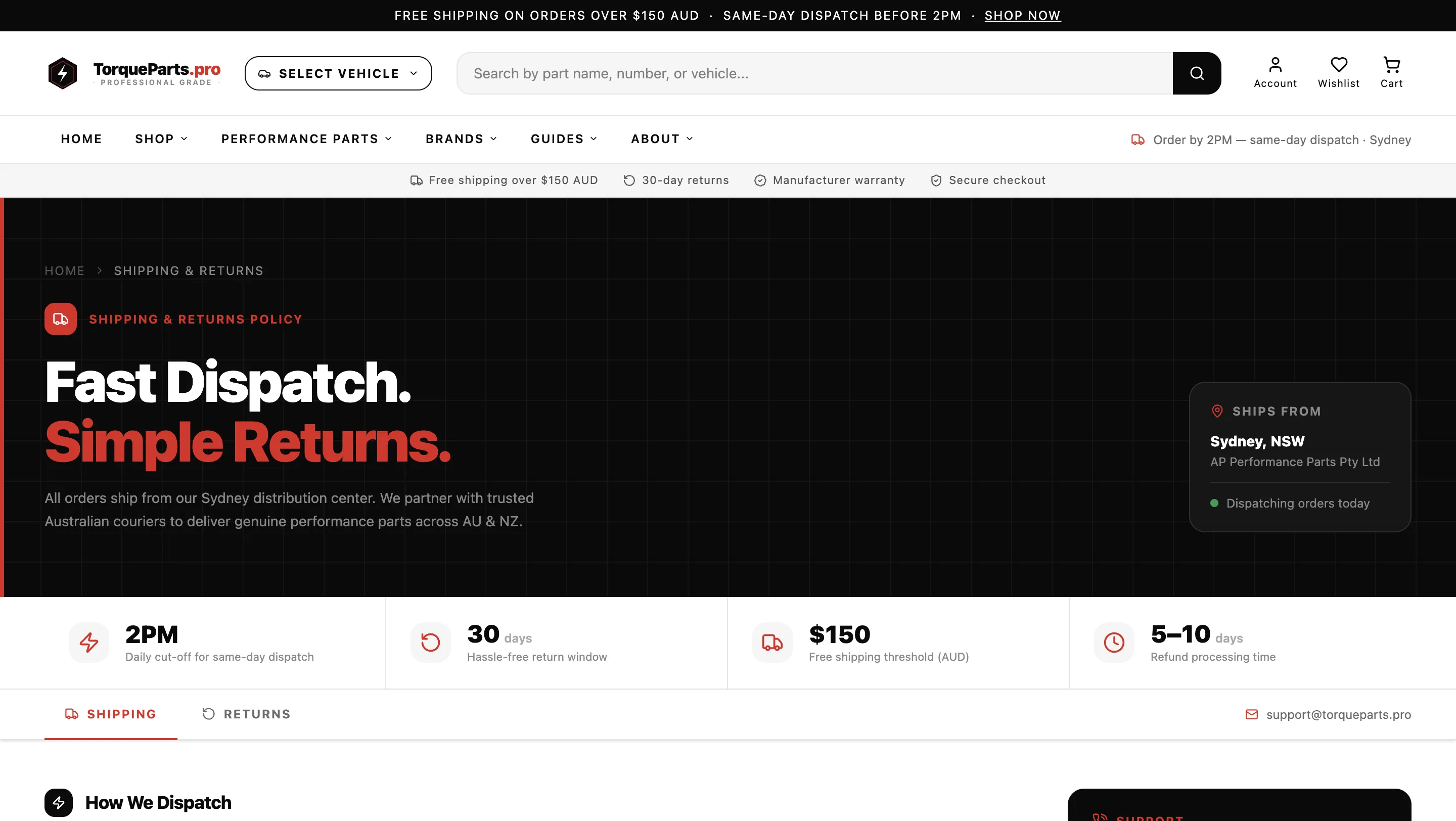
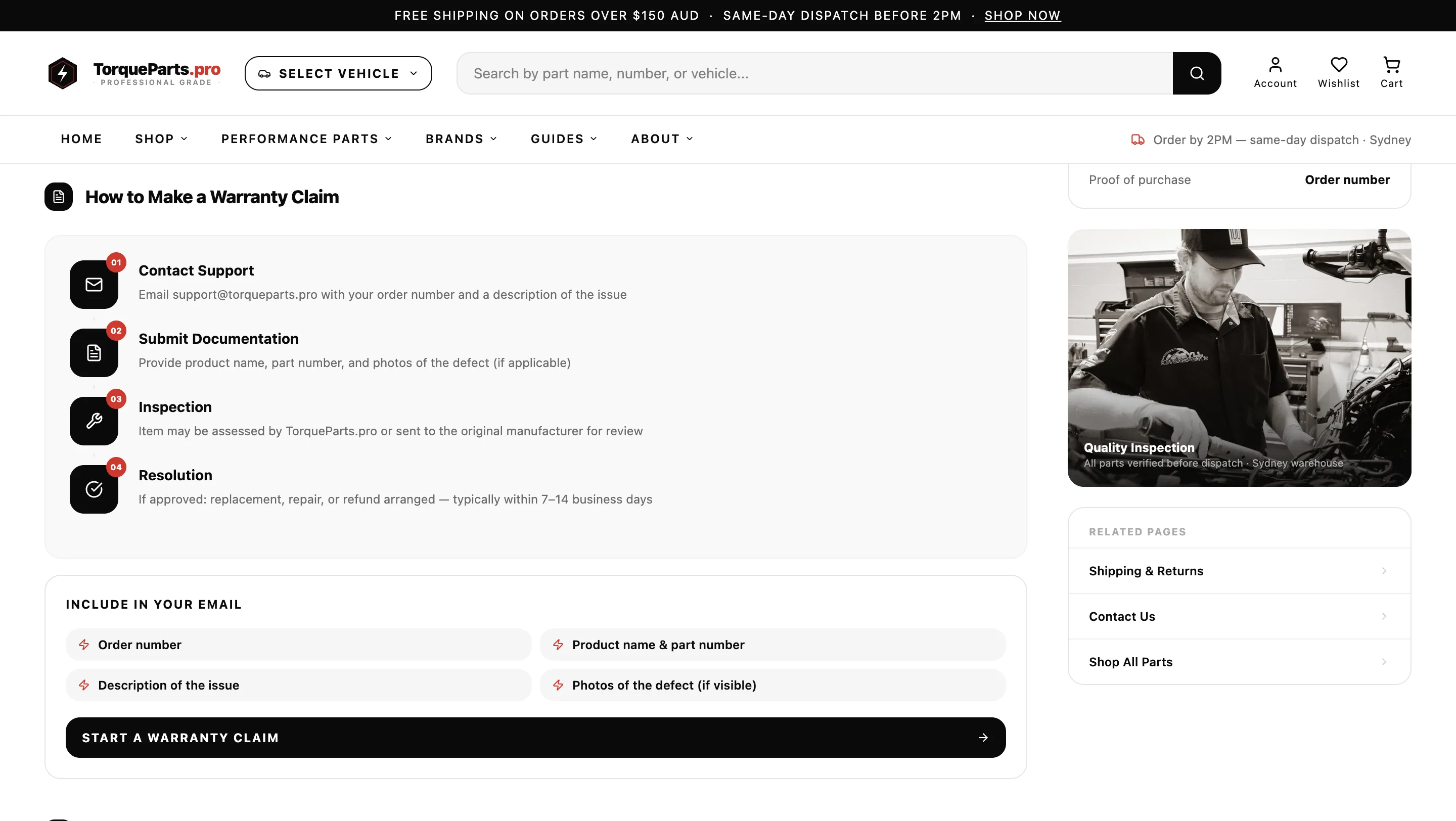
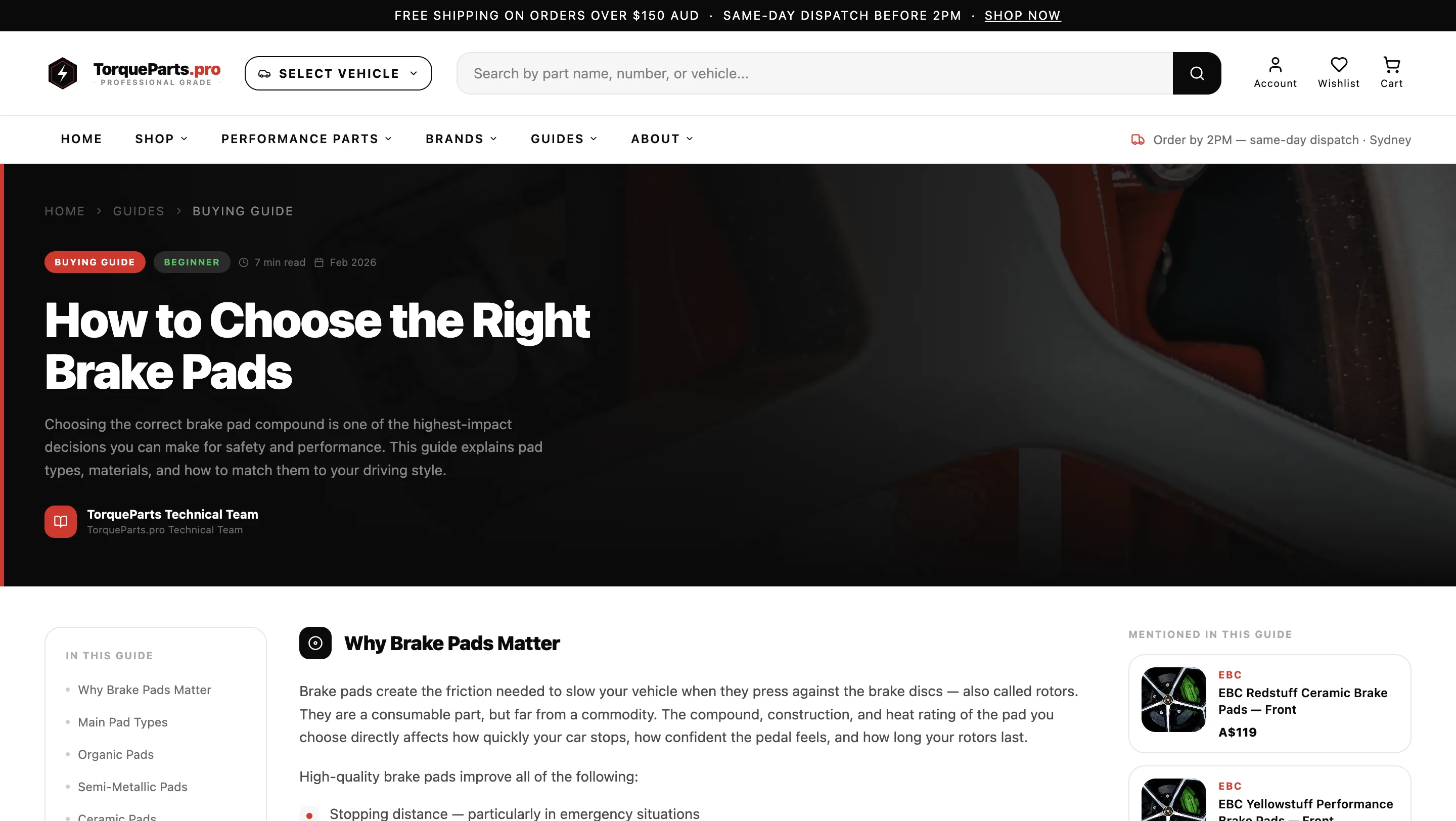
Exploring a Similar Marketplace Direction?
If you're scoping a commerce platform where interface design, catalog logic and operational architecture need to be thought through together — that's the work we do in real engagements.