Project Overview
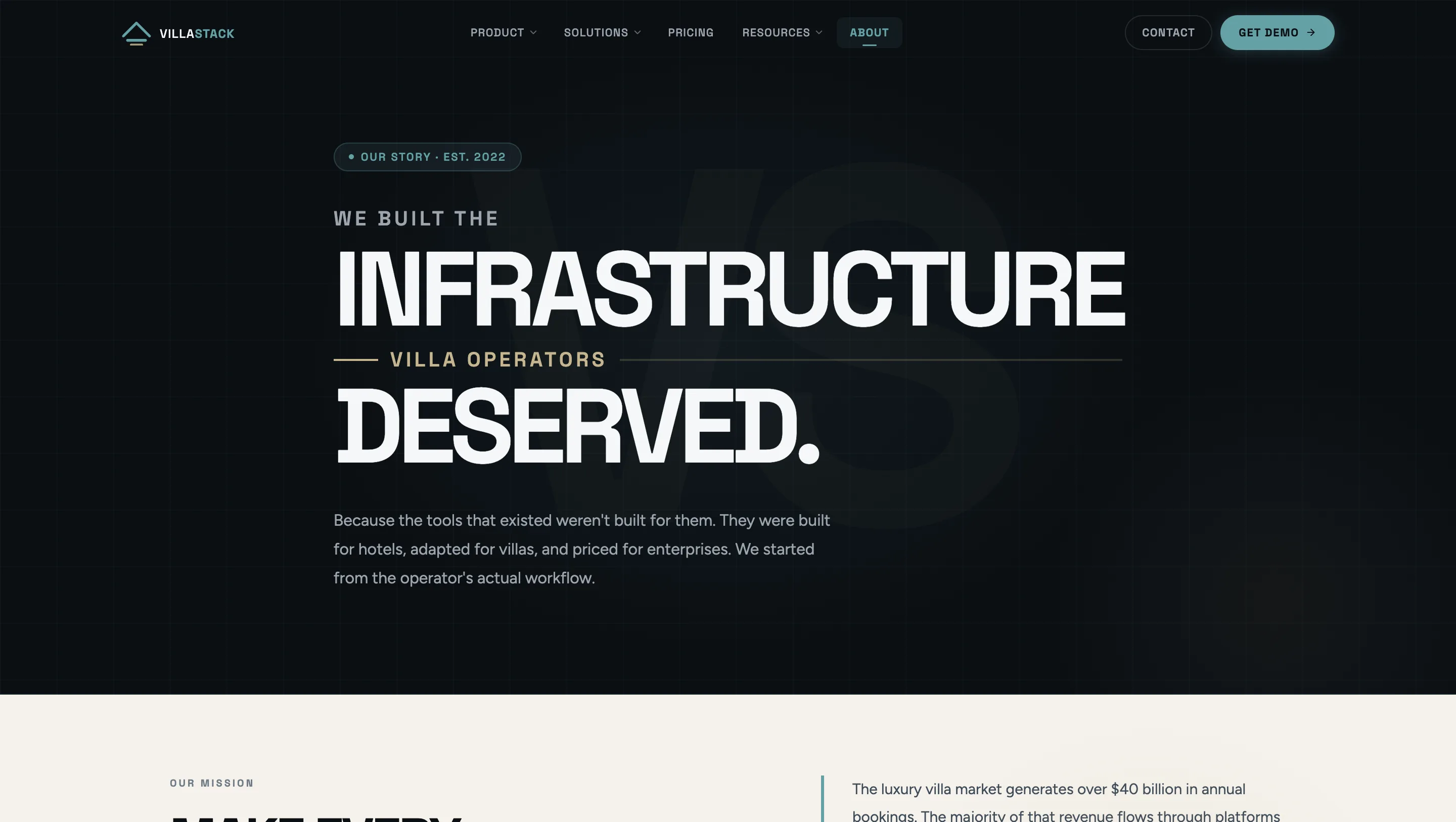
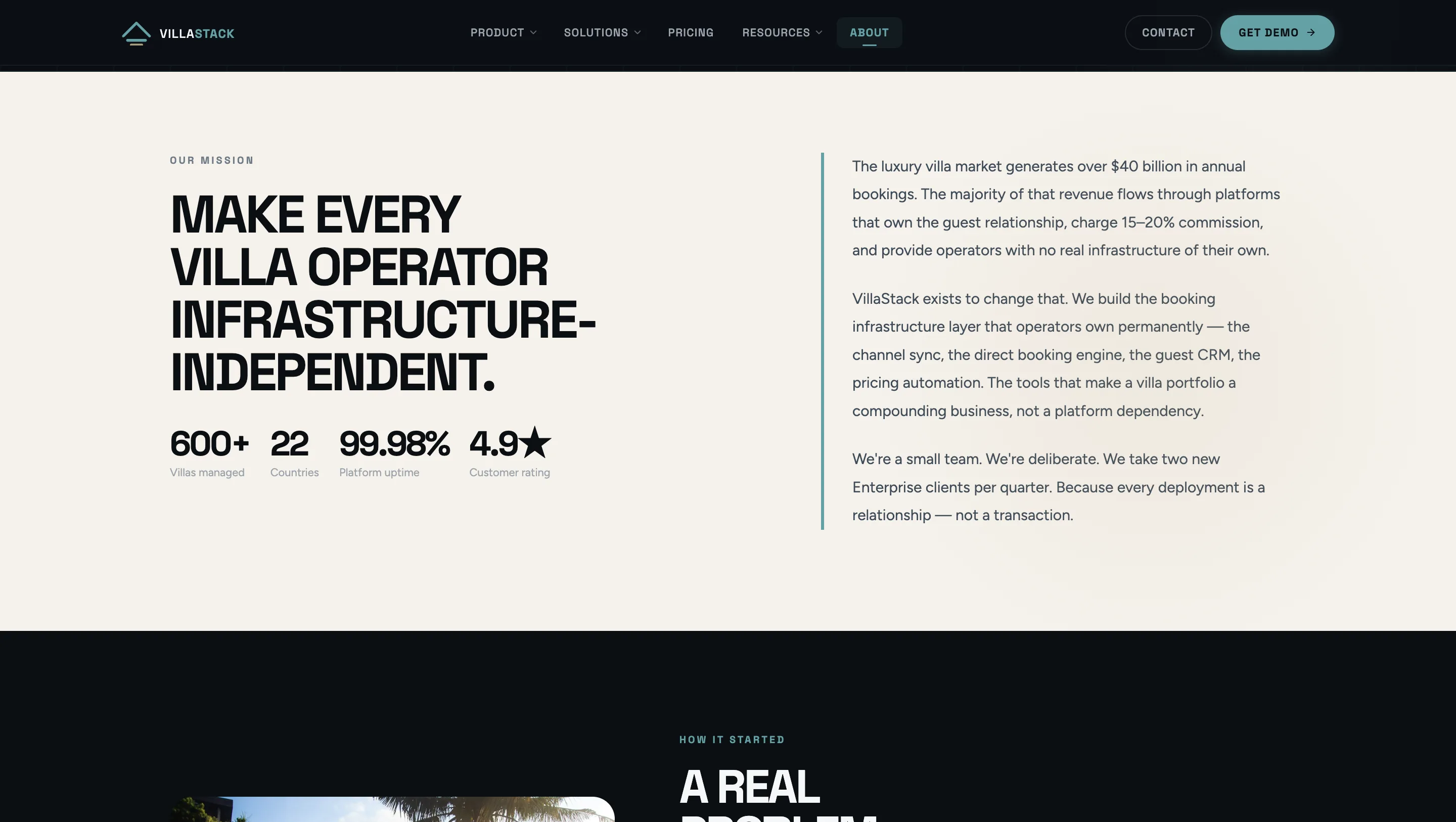
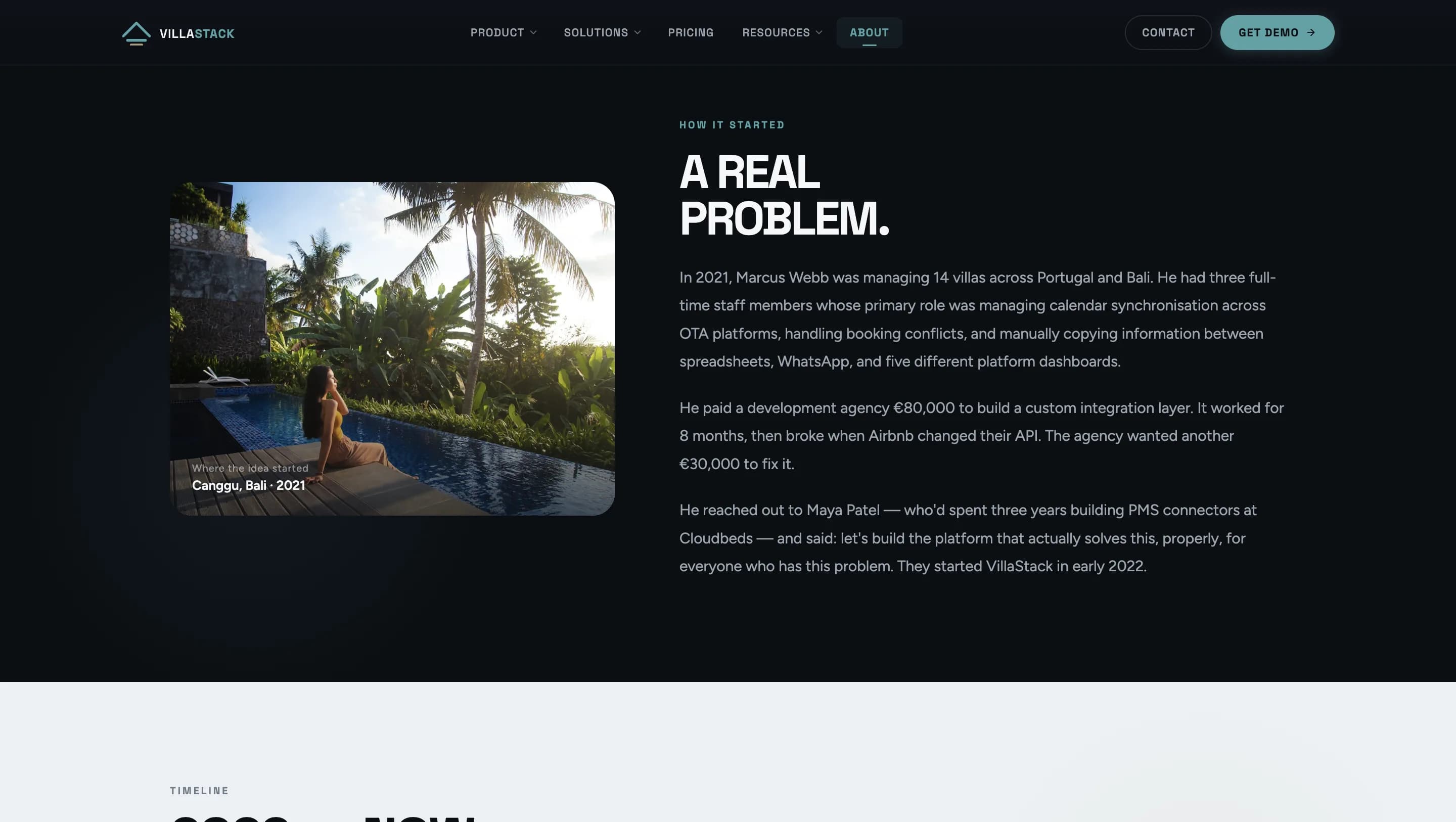
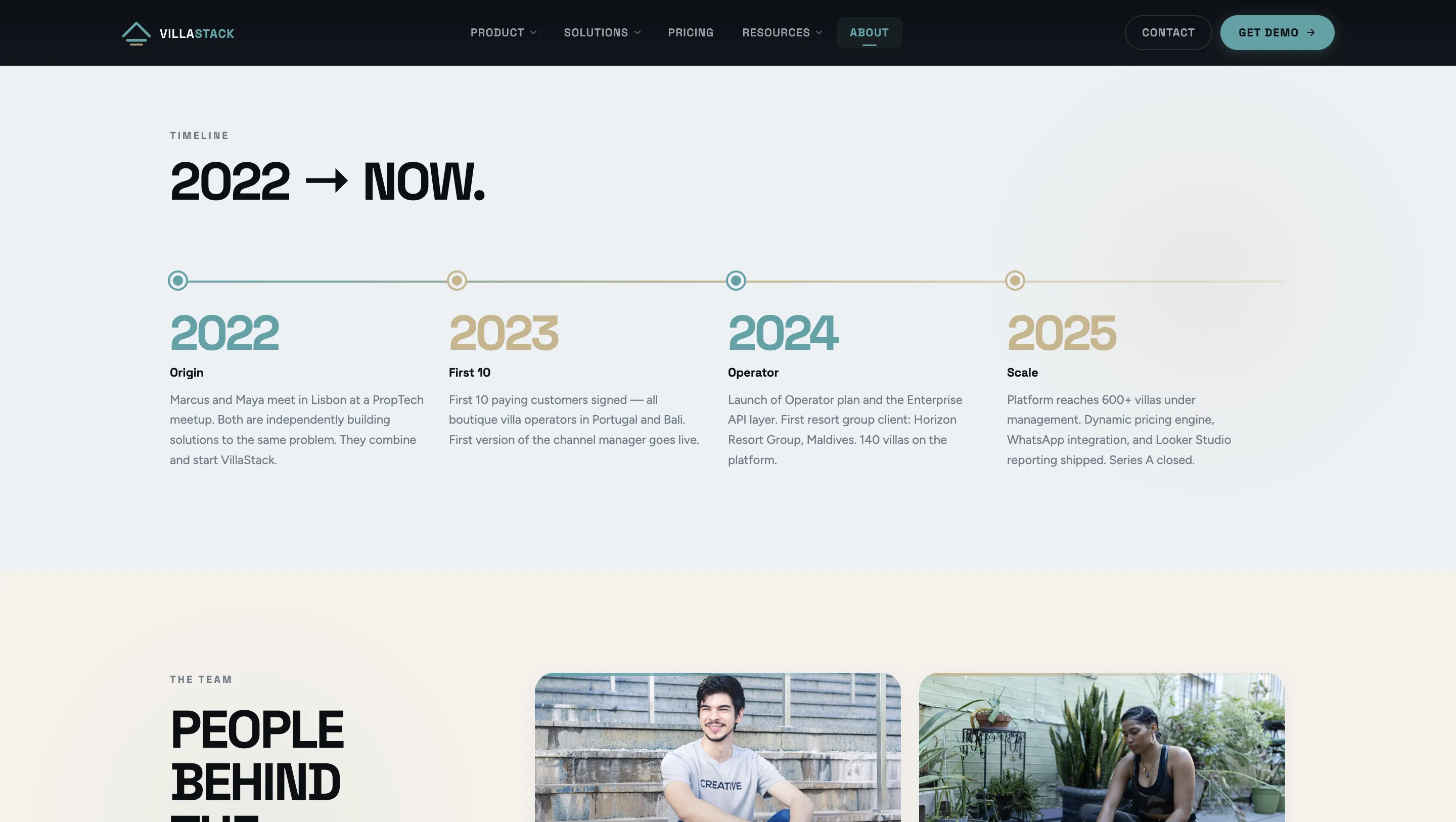
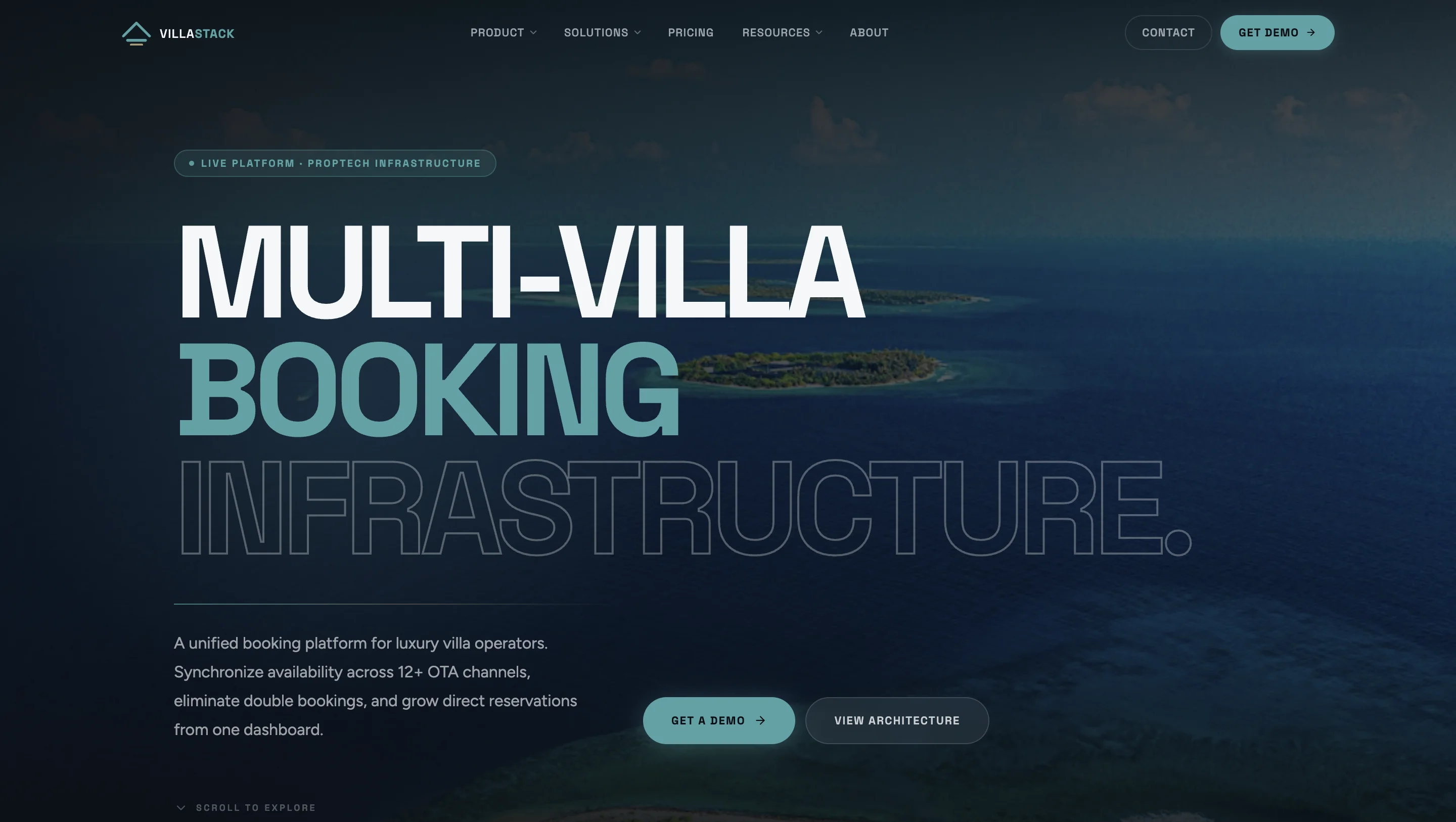
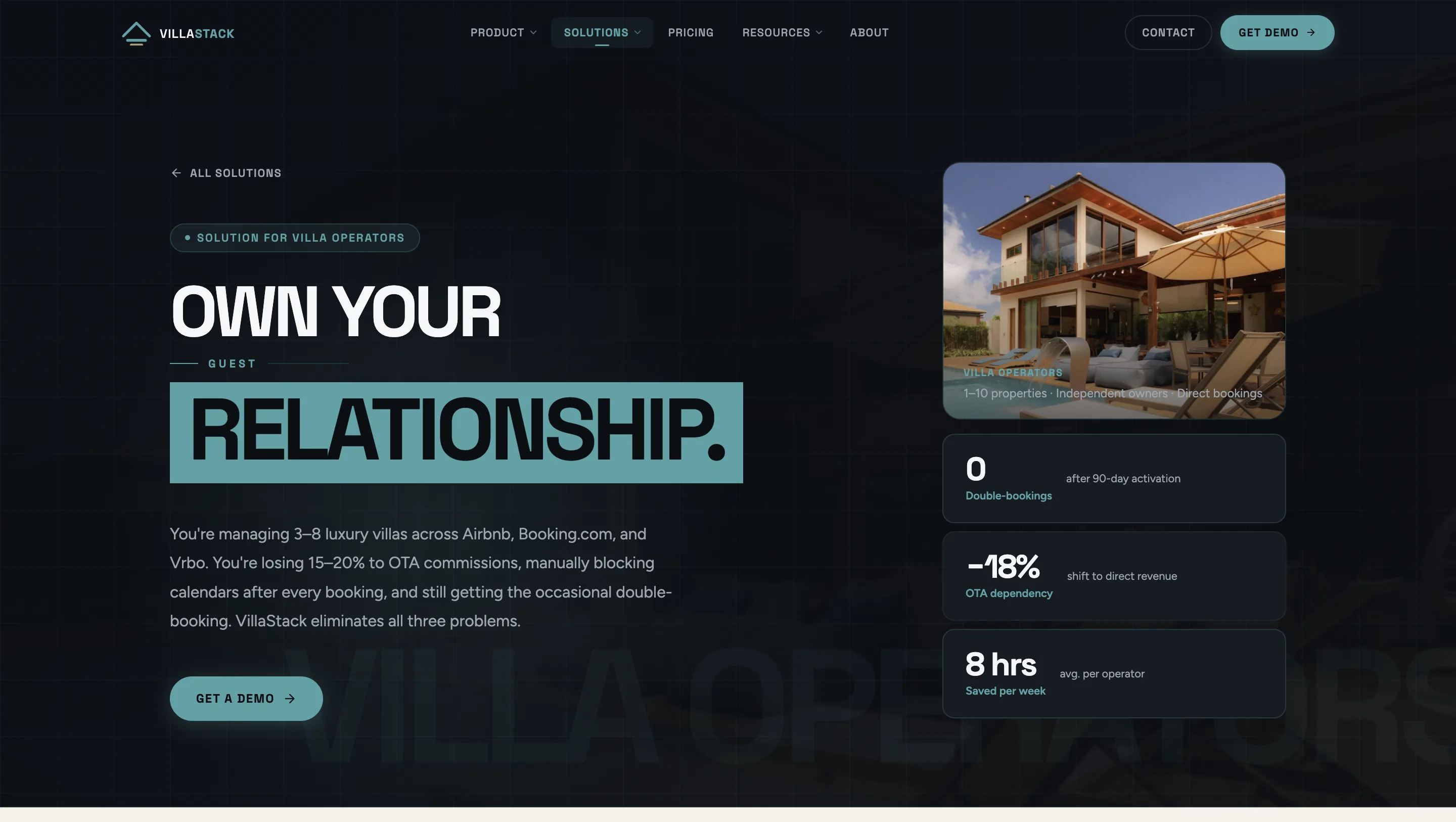
This is an internal H Product Studio concept build — a design exercise, not client work. The brand name 'VillaStack' and all interface visuals are illustrative.
It asks what a B2B SaaS platform should look like for operators running luxury villas across multiple distribution channels at once.
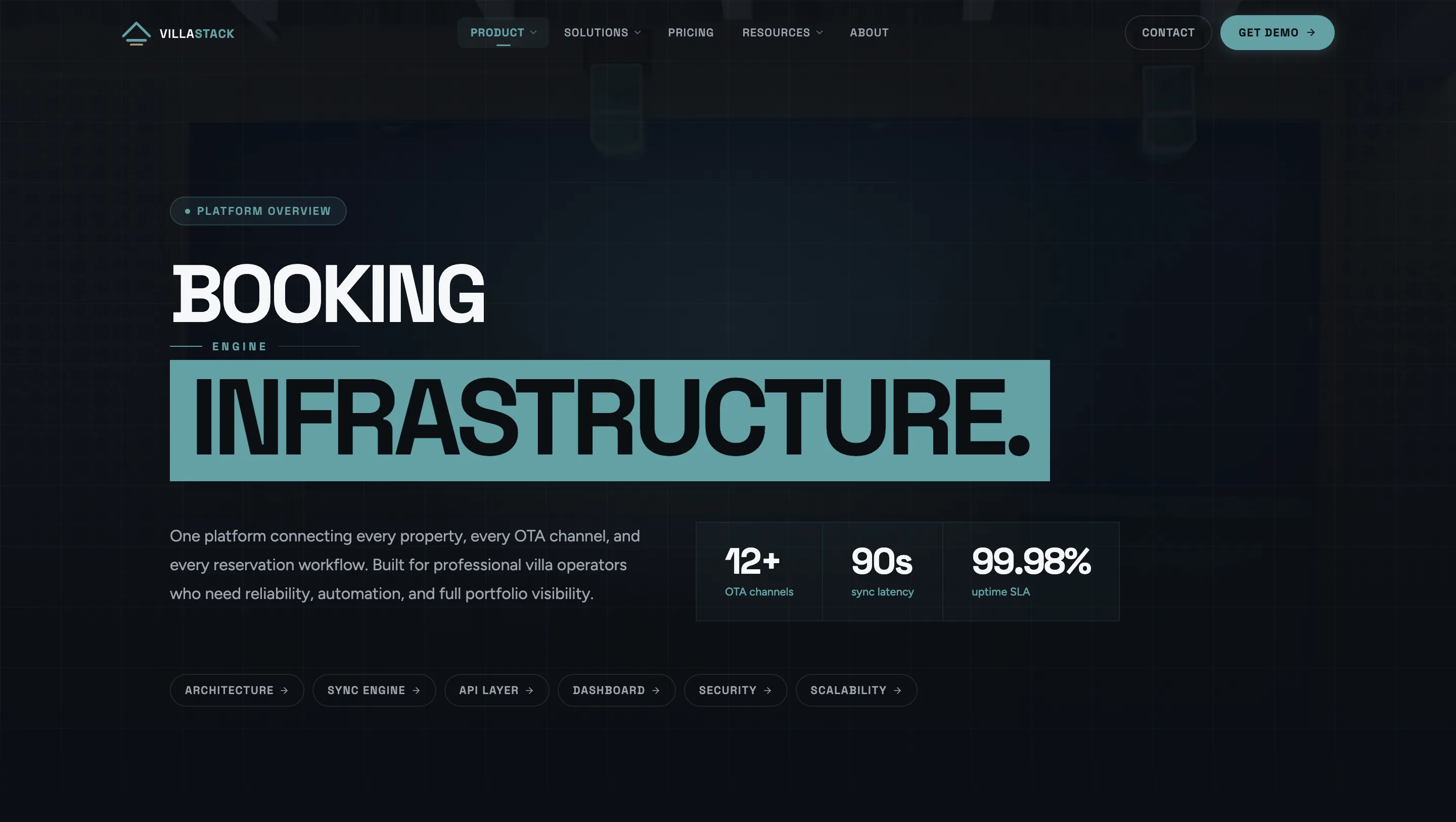
The shape that emerges is an operating system for the portfolio: reservations, pricing, guest communication and payouts unified for independent owners, management companies, boutique resort groups and real-estate portfolios.
The Challenge
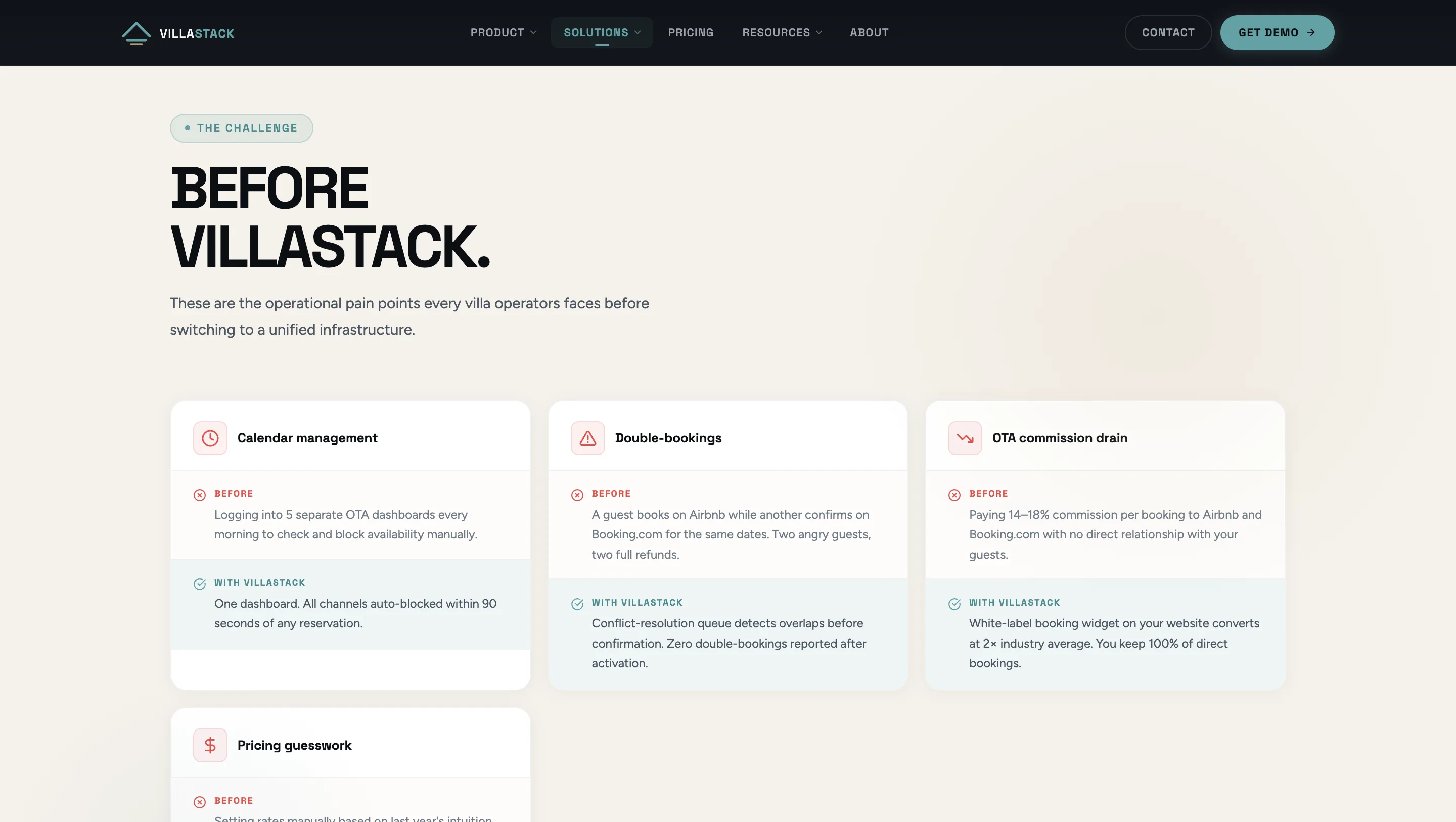
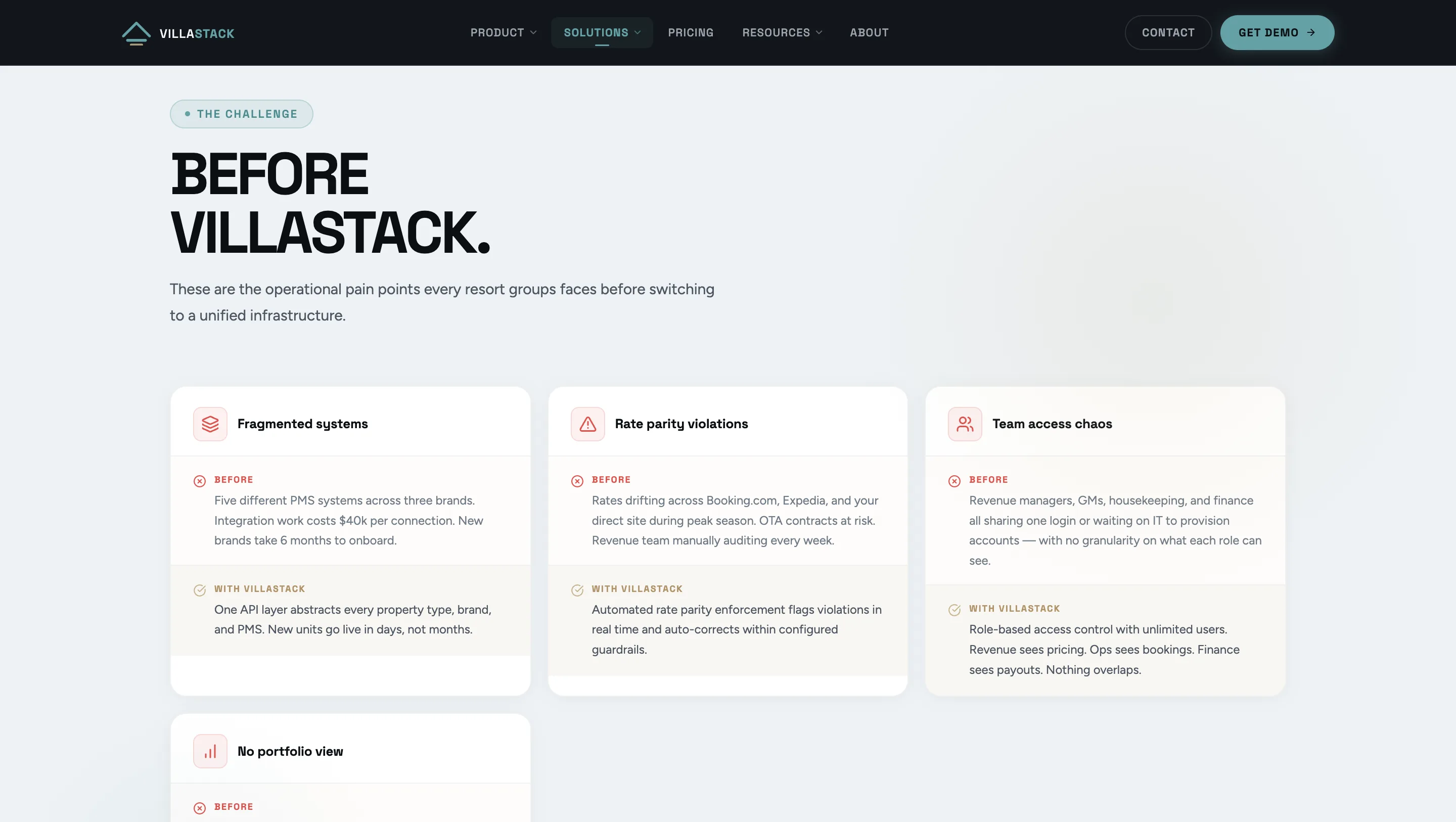
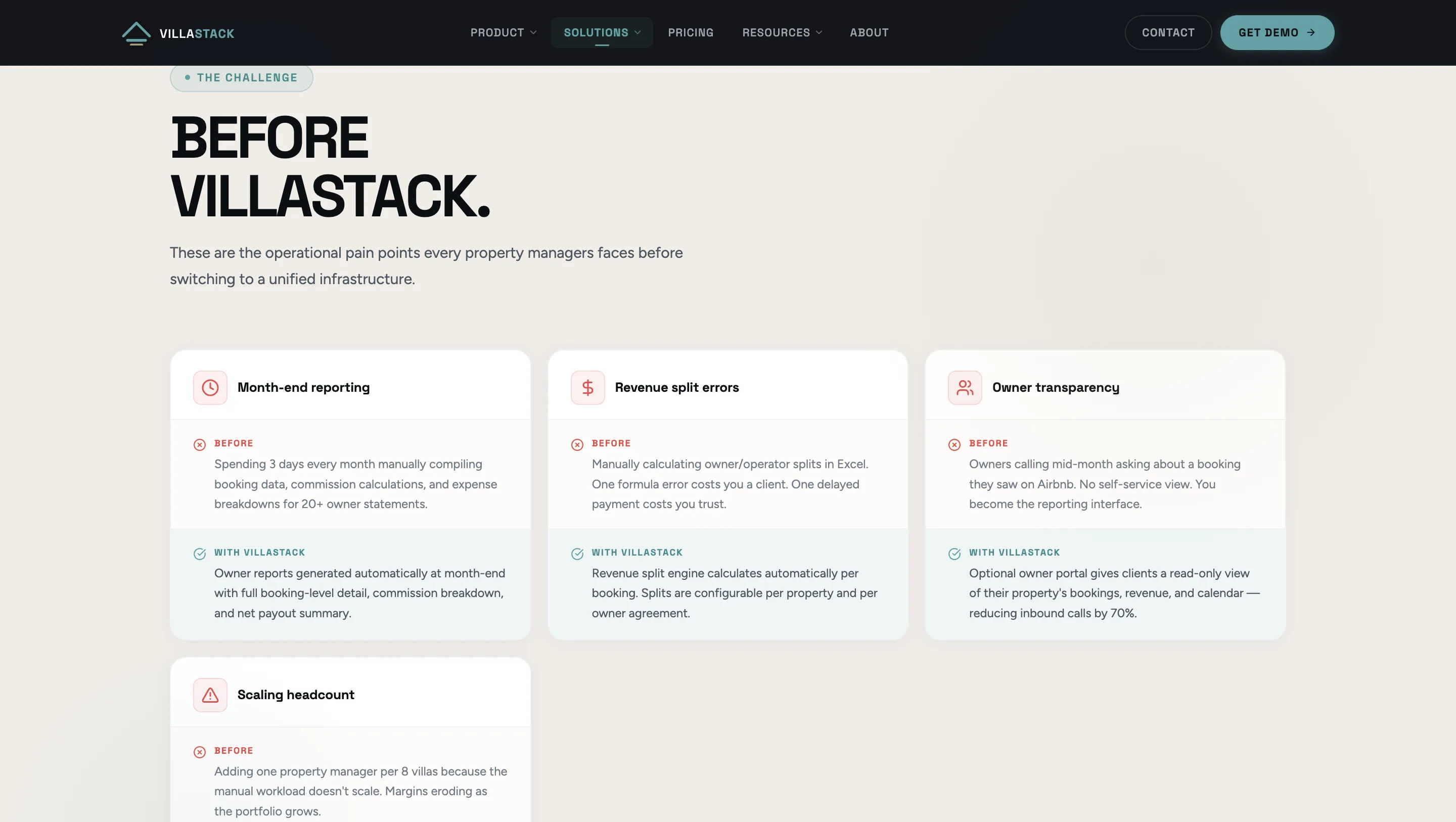
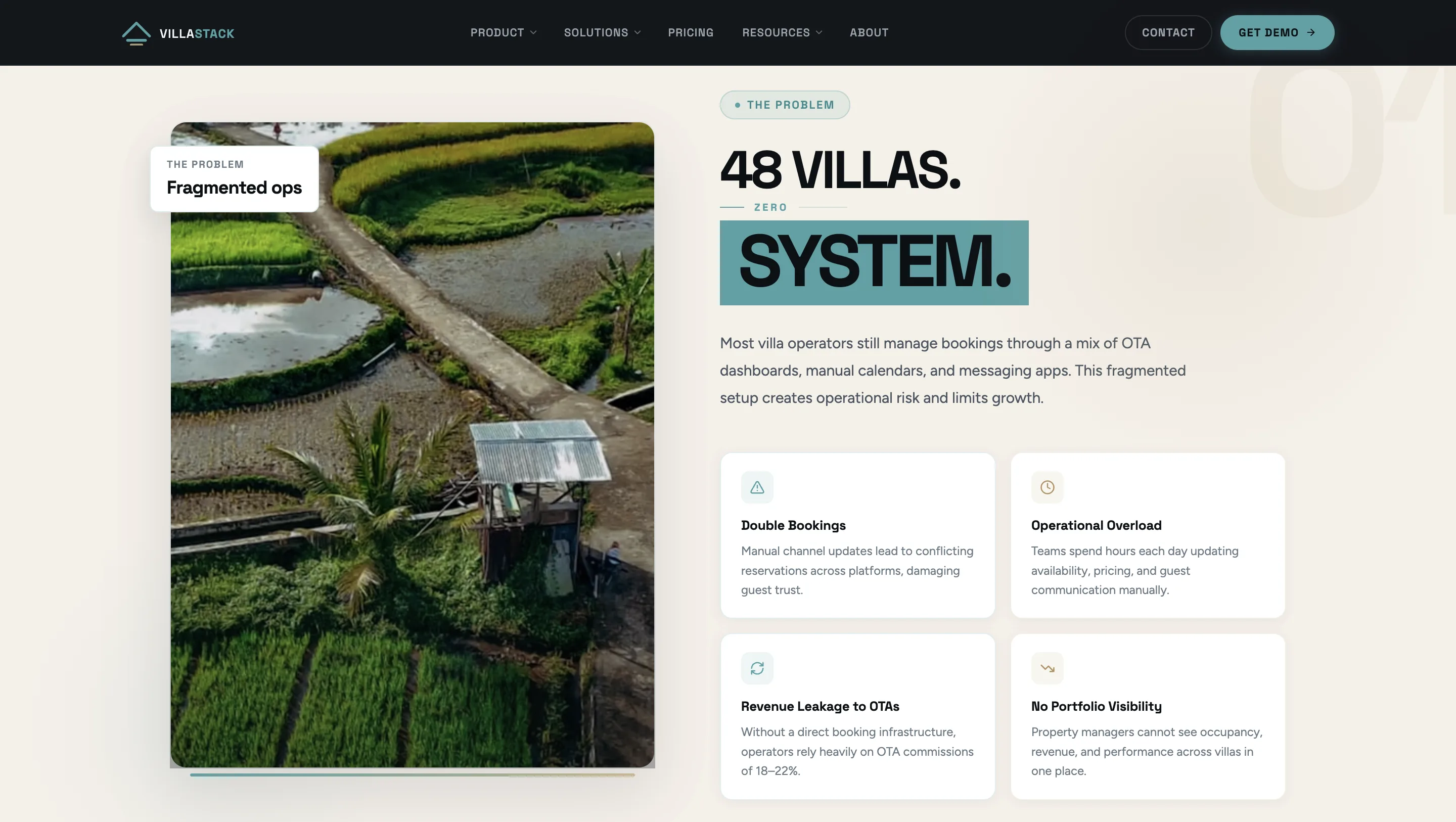
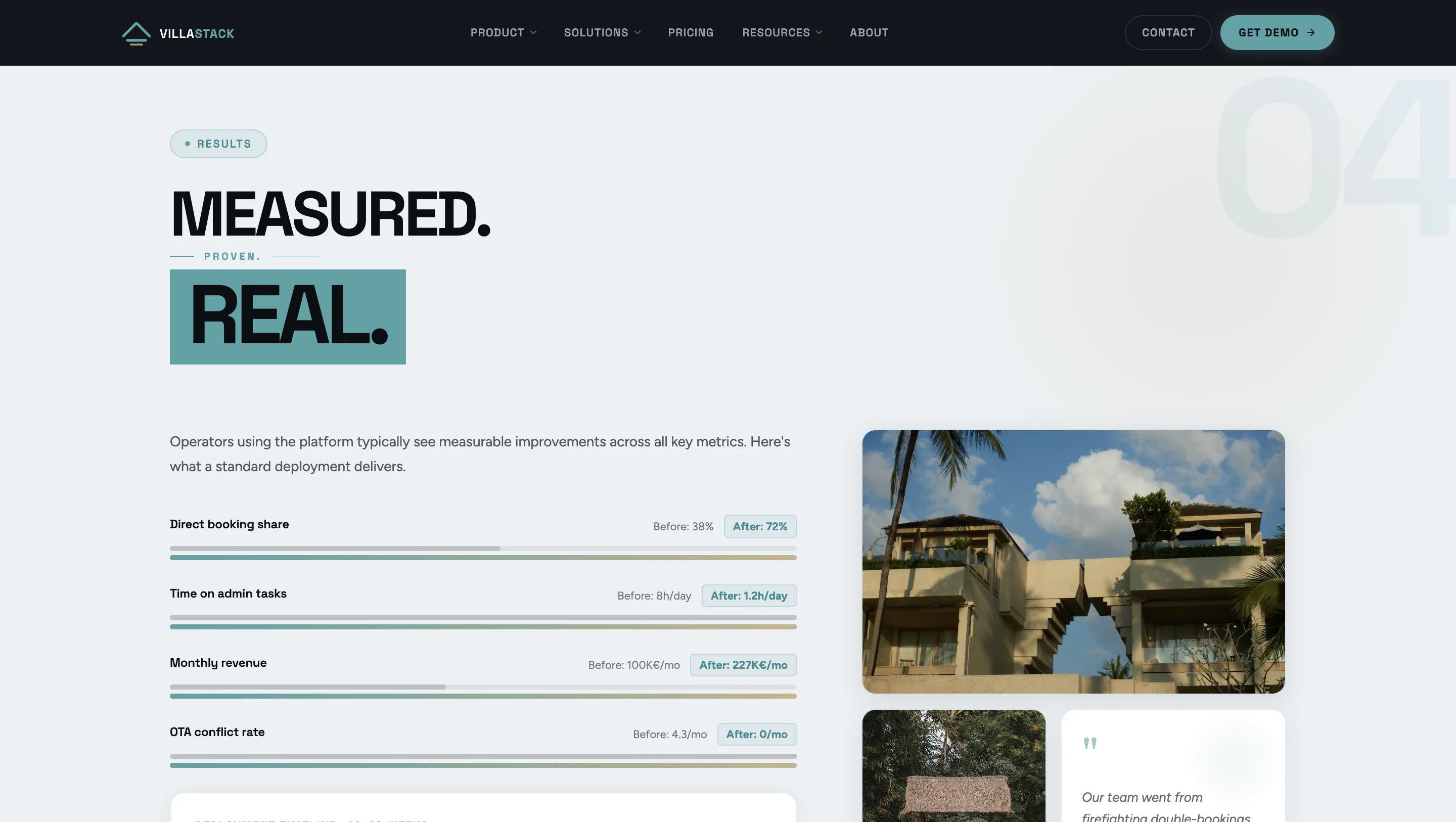
Picture an operator with a luxury villa portfolio spread across several booking platforms — the friction points below are where such setups reliably hurt.
Double bookings
Availability updated by hand across channels means reservation conflicts are a matter of when, not if.
Manual channel management
Teams babysit calendars, pricing and restrictions across separate OTA dashboards all day.
Fragmented guest communication
Messages arrive from every platform separately, and consistency erodes.
Complex revenue distribution
Money has to split cleanly between operators, owners and service partners — spreadsheets don't scale for that.
The Solution
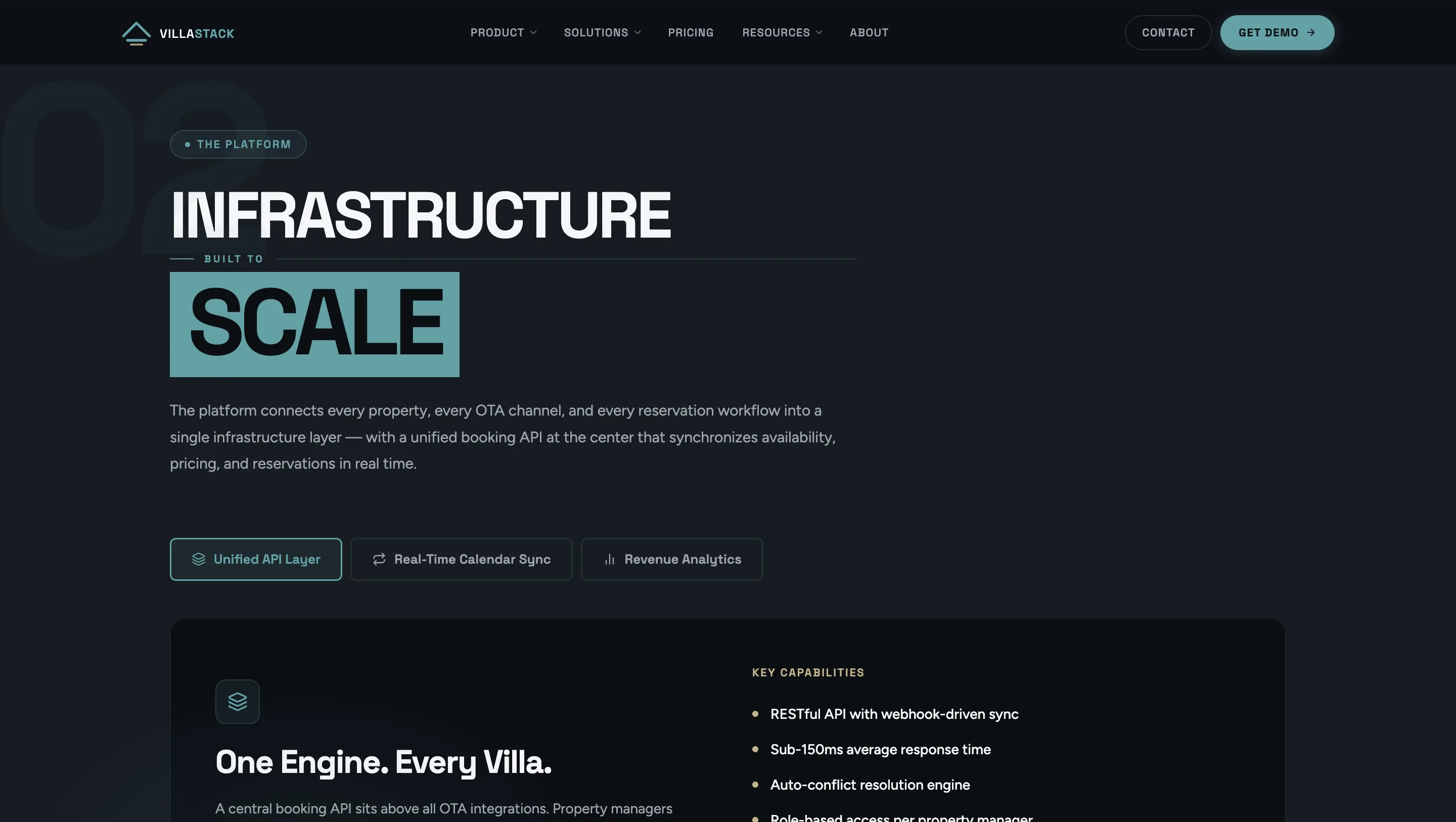
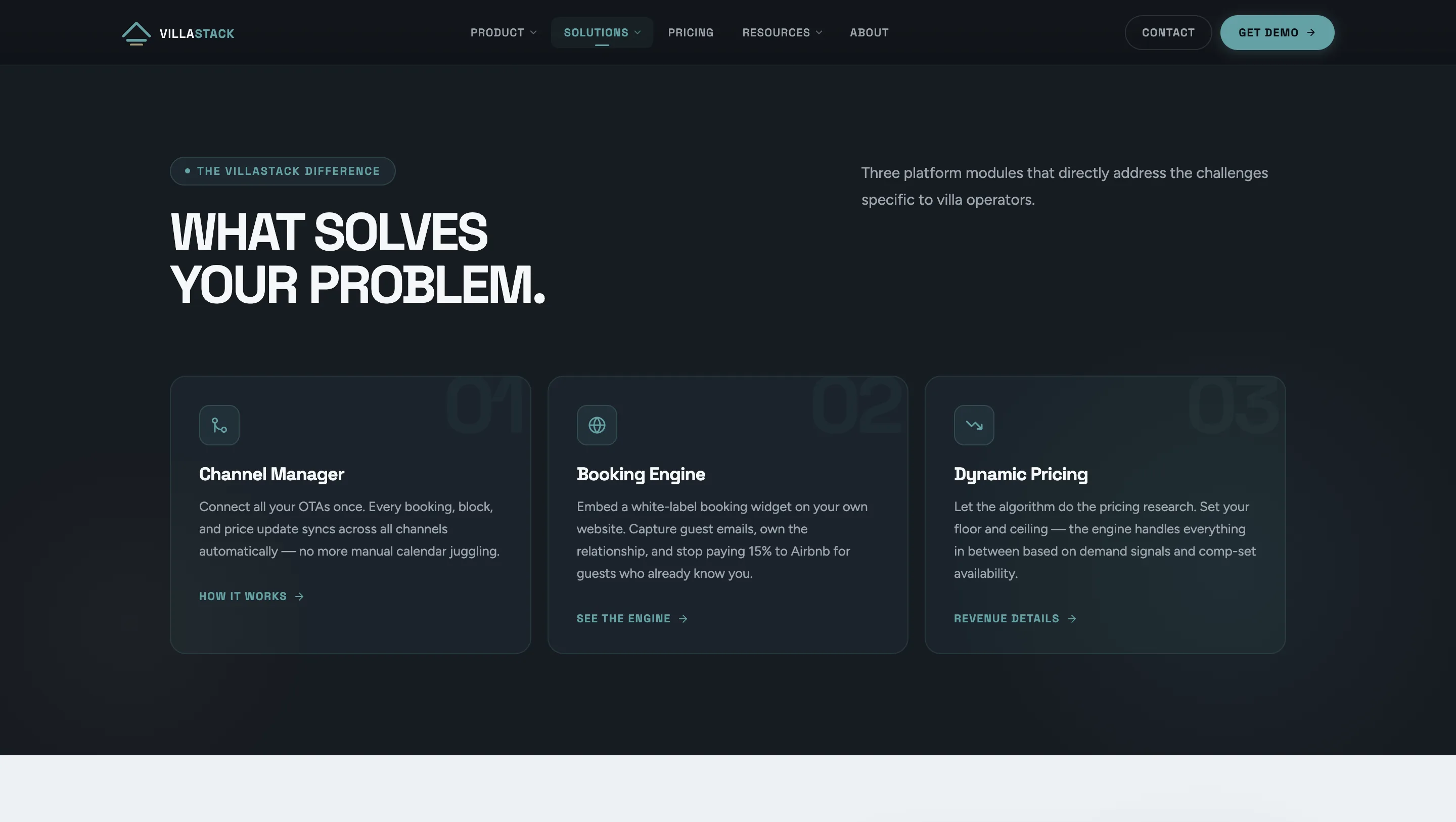
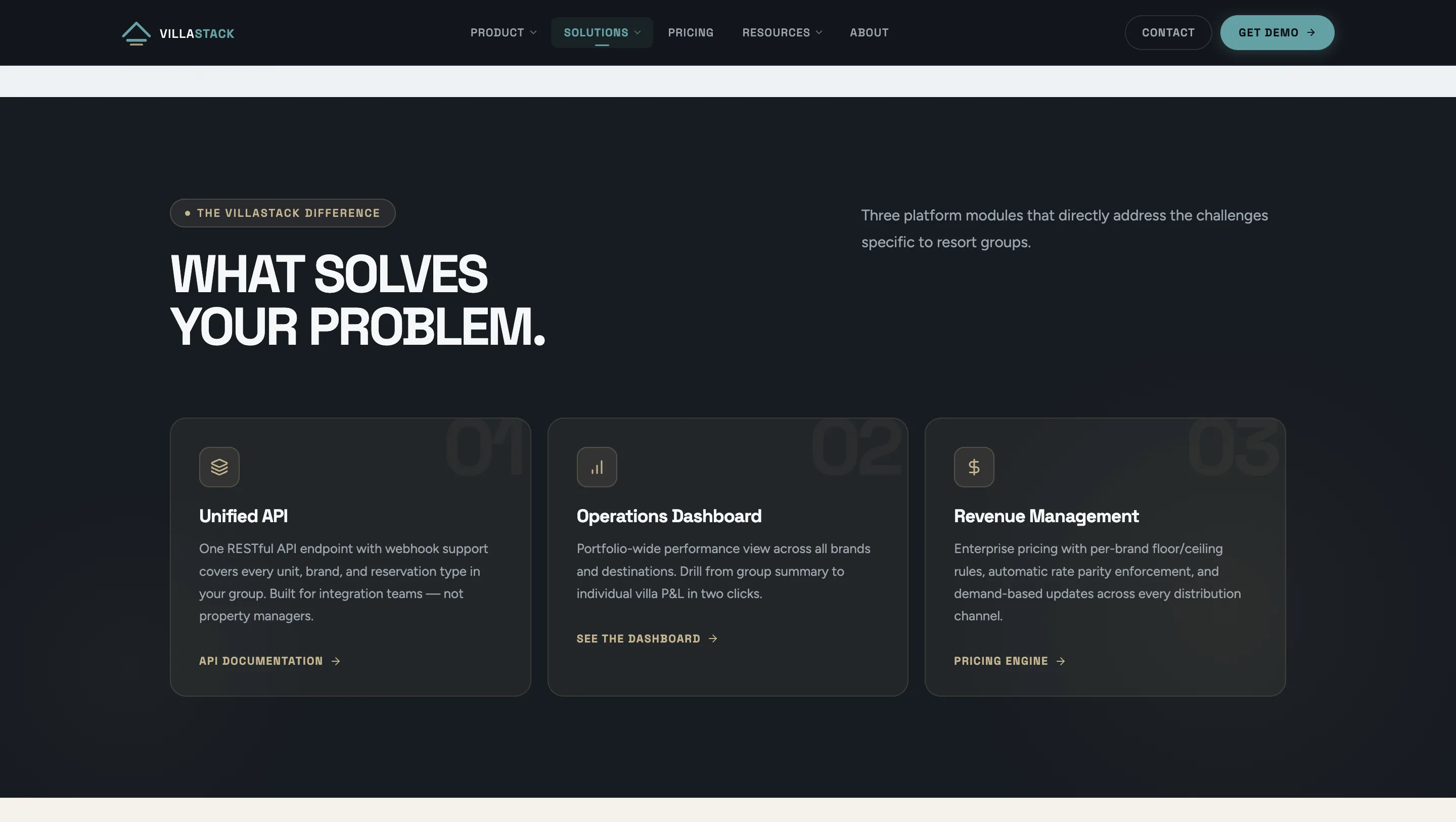
The concept collapses booking channels and operational workflows into one unified platform layer.
- Booking distribution (illustrative)
- Pricing automation (illustrative)
- Guest communication (illustrative)
- Operational analytics (illustrative)
- Financial infrastructure (illustrative)
- Designed for near-real-time sync of availability, pricing and reservations across OTA channels in a future production version
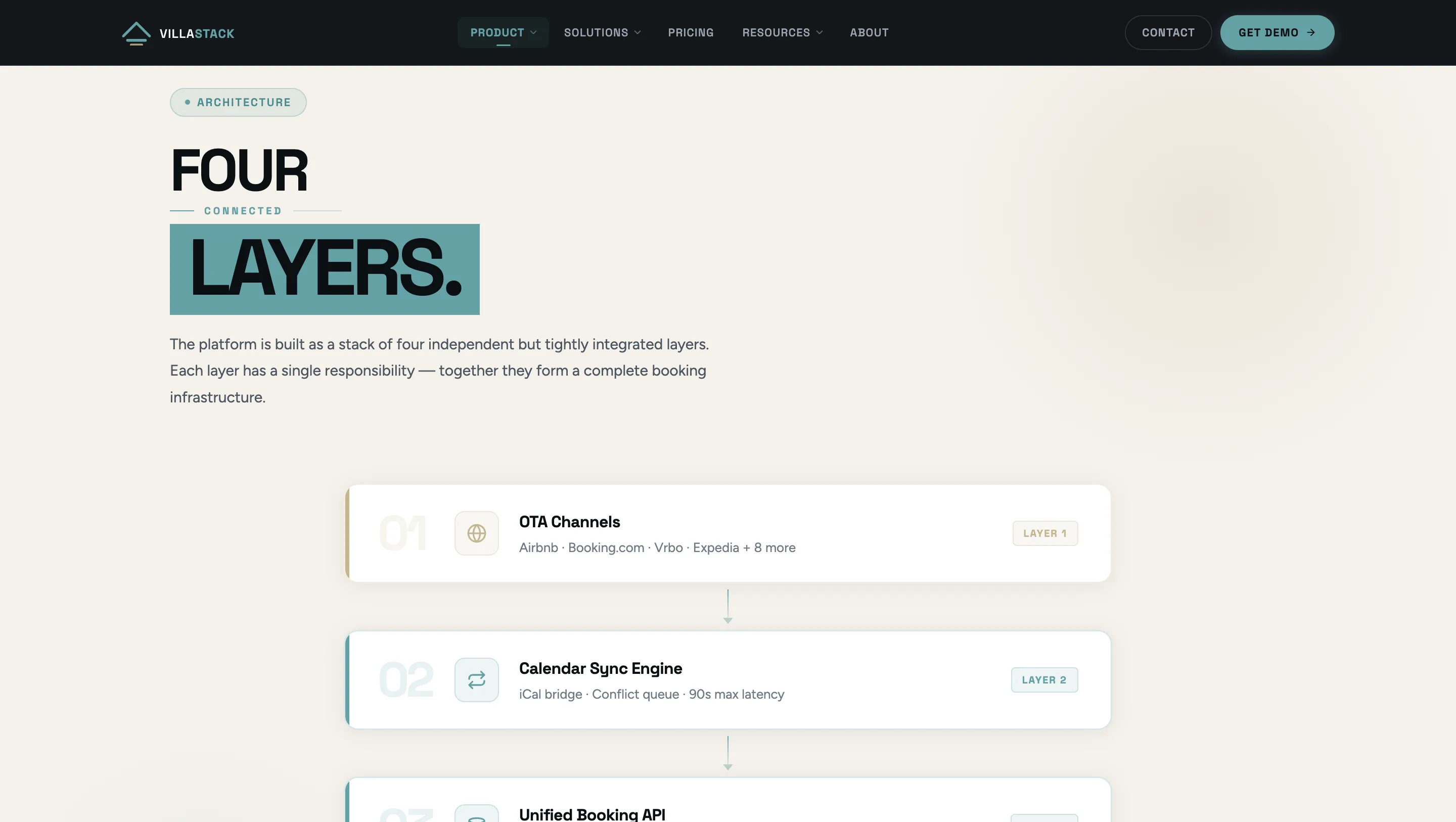
Platform Architecture
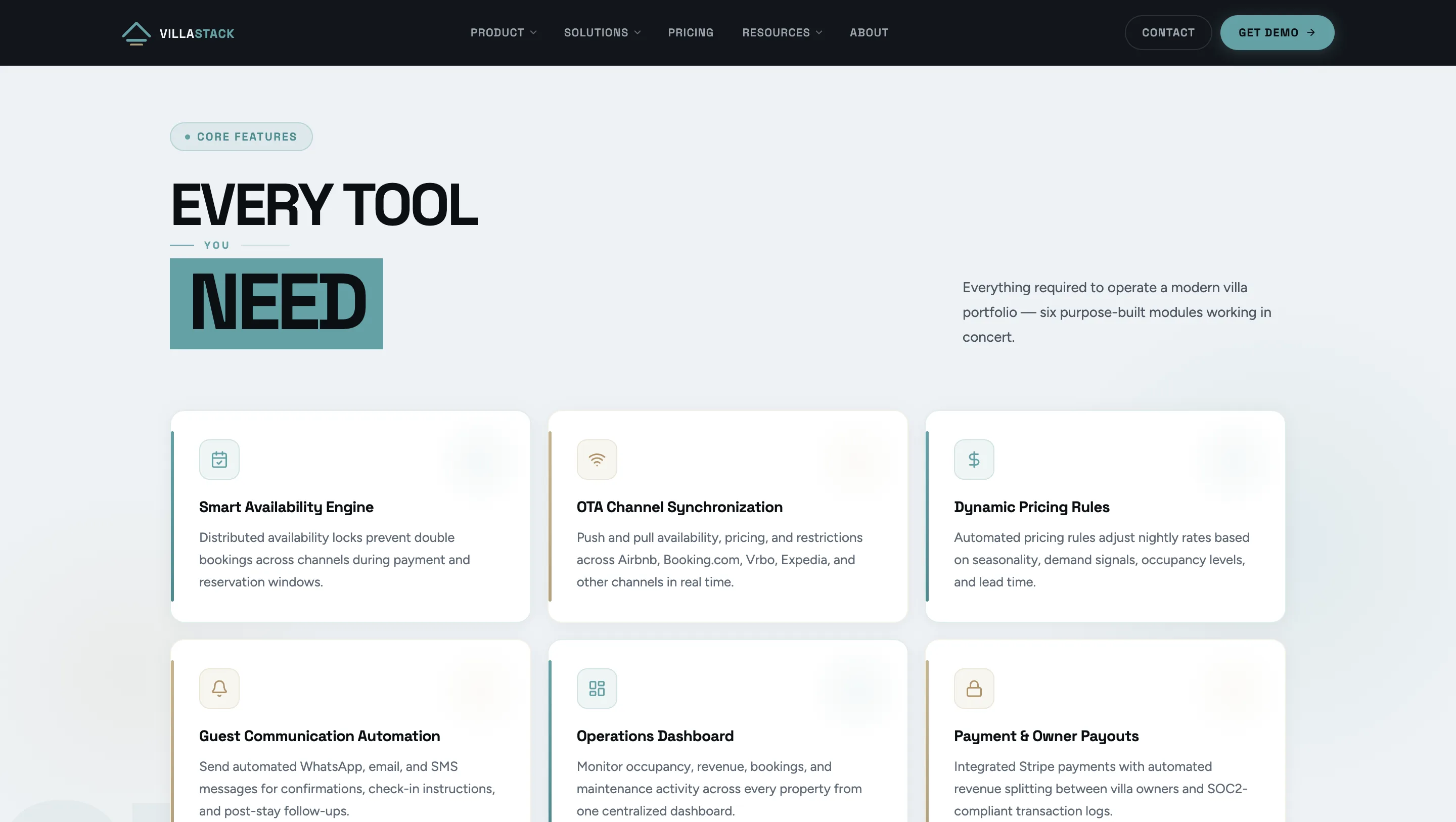
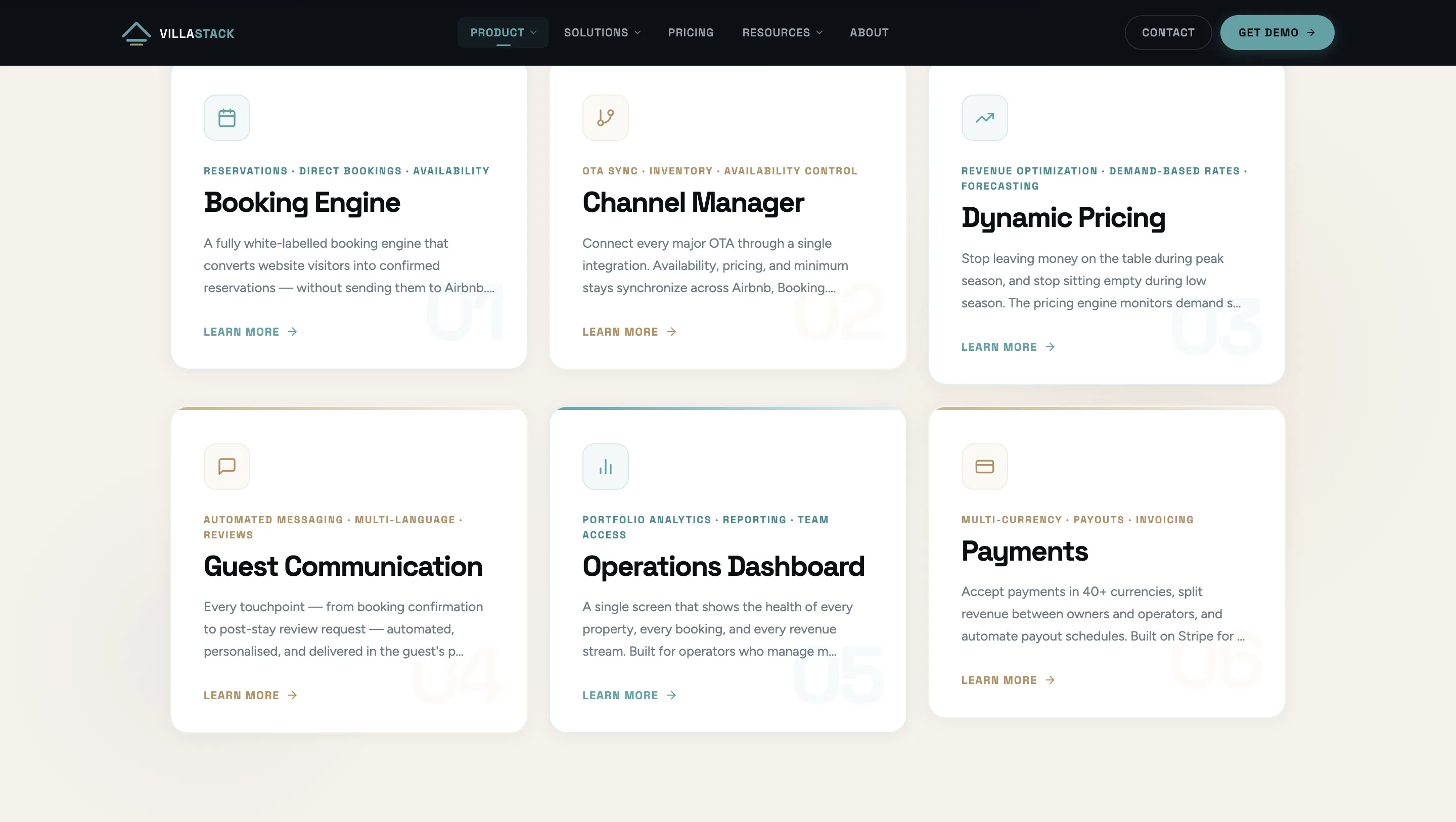
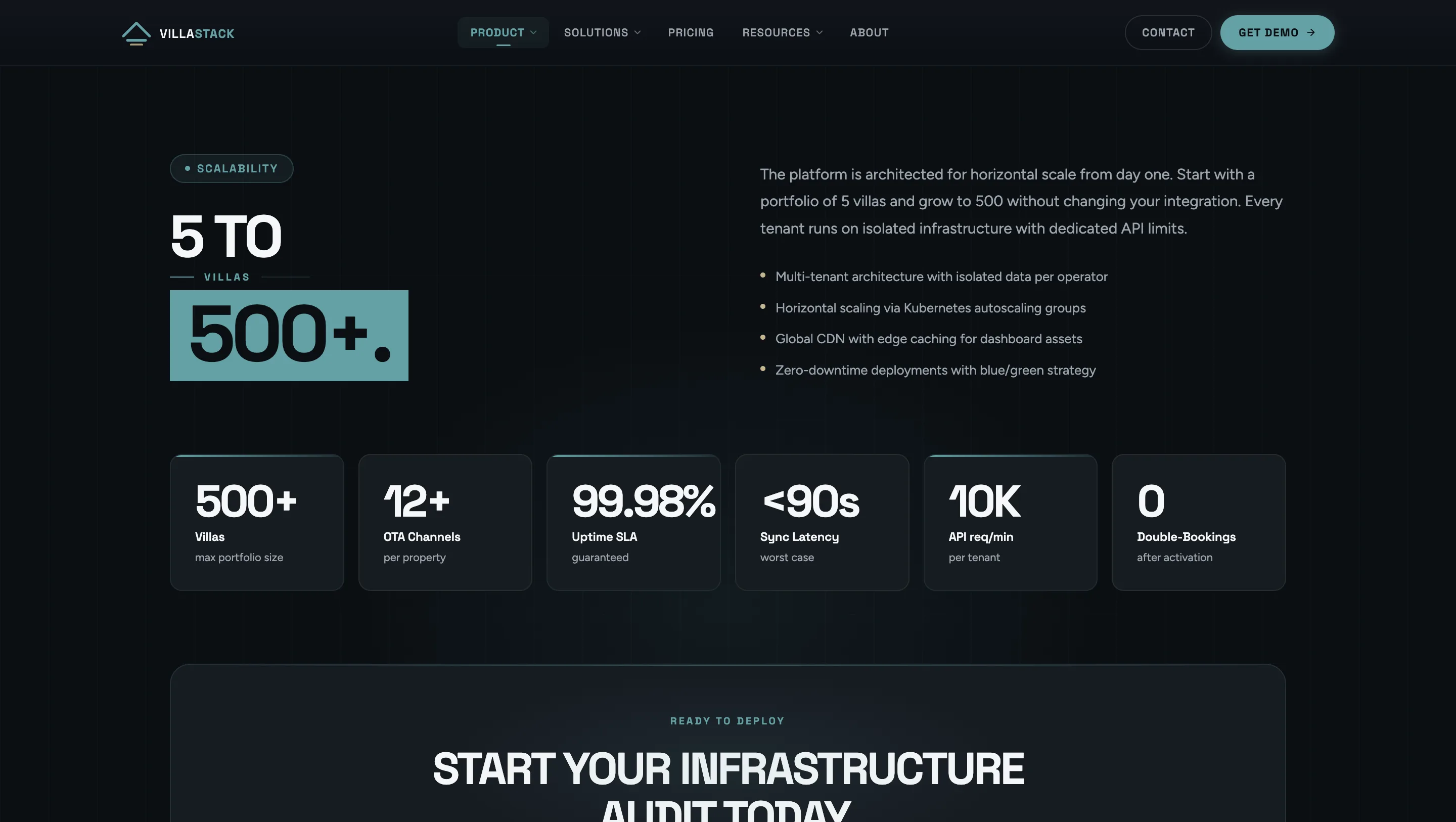
Six operational modules make up the modular system. Illustrative modules in this concept only.
- Booking Engine
- Channel Manager
- Dynamic Pricing
- Guest Communication
- Operations Dashboard
- Payments Infrastructure
Flow
OTA Channels -> Channel Manager -> Booking Infrastructure -> Operations Dashboard -> Payments & Reporting
Core Platform Modules
Booking Engine
Illustrative module: a white-label direct-booking layer that cuts full OTA dependency in a future production version.
- Custom booking widget concepts
- Website integration sketch
- Intended secure payment processing
- Direct bookings outside OTA commission flows
Channel Manager
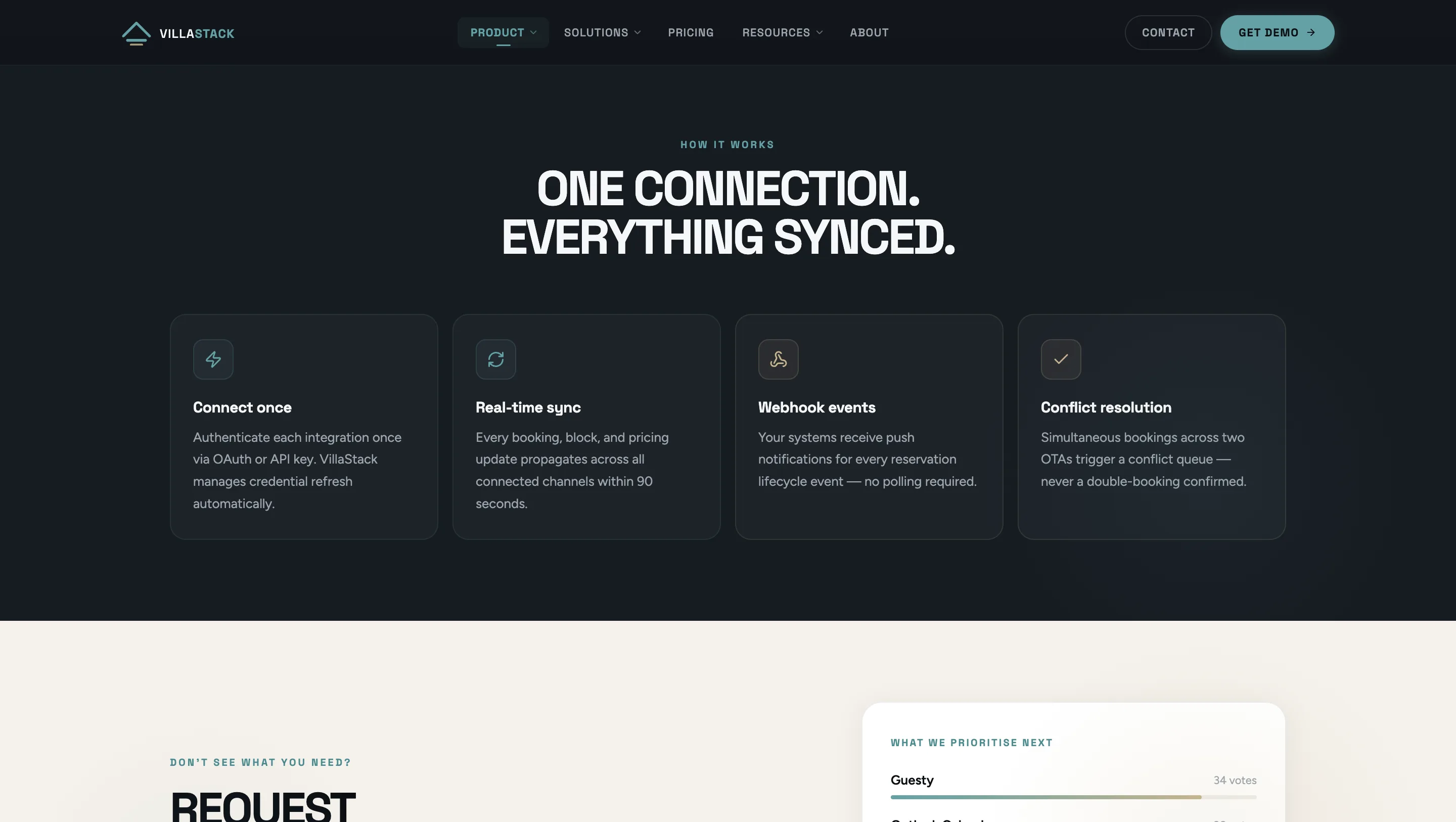
Illustrative module: availability and pricing sync reaching 12+ OTA channels through standard channel-manager APIs.
- Near-real-time calendar sync
- Automatic conflict prevention
- Centralized pricing update concept
- Availability distribution sketch
Dynamic Pricing
Illustrative module: nightly rates adjusting automatically to demand signals in a production version.
- Seasonal demand
- Occupancy levels
- Booking lead time
- Regional market data
Guest Communication
Illustrative module: every guest touchpoint funneled into one communication layer.
- Automated confirmation concept
- Check-in instruction templates
- Unified messaging inbox sketch
- Multilingual support concept
Operations Dashboard
Illustrative module: the whole portfolio at a glance, with role-based access patterns.
- Occupancy rates
- Booking performance
- Revenue trends
- Operational activity by property
Payments Infrastructure
Illustrative module: payout rails for operators and owners, sketched end to end.
- Support for 40+ currencies
- Automatic payout split concept
- Stripe-grade payment processor integration
Integrations
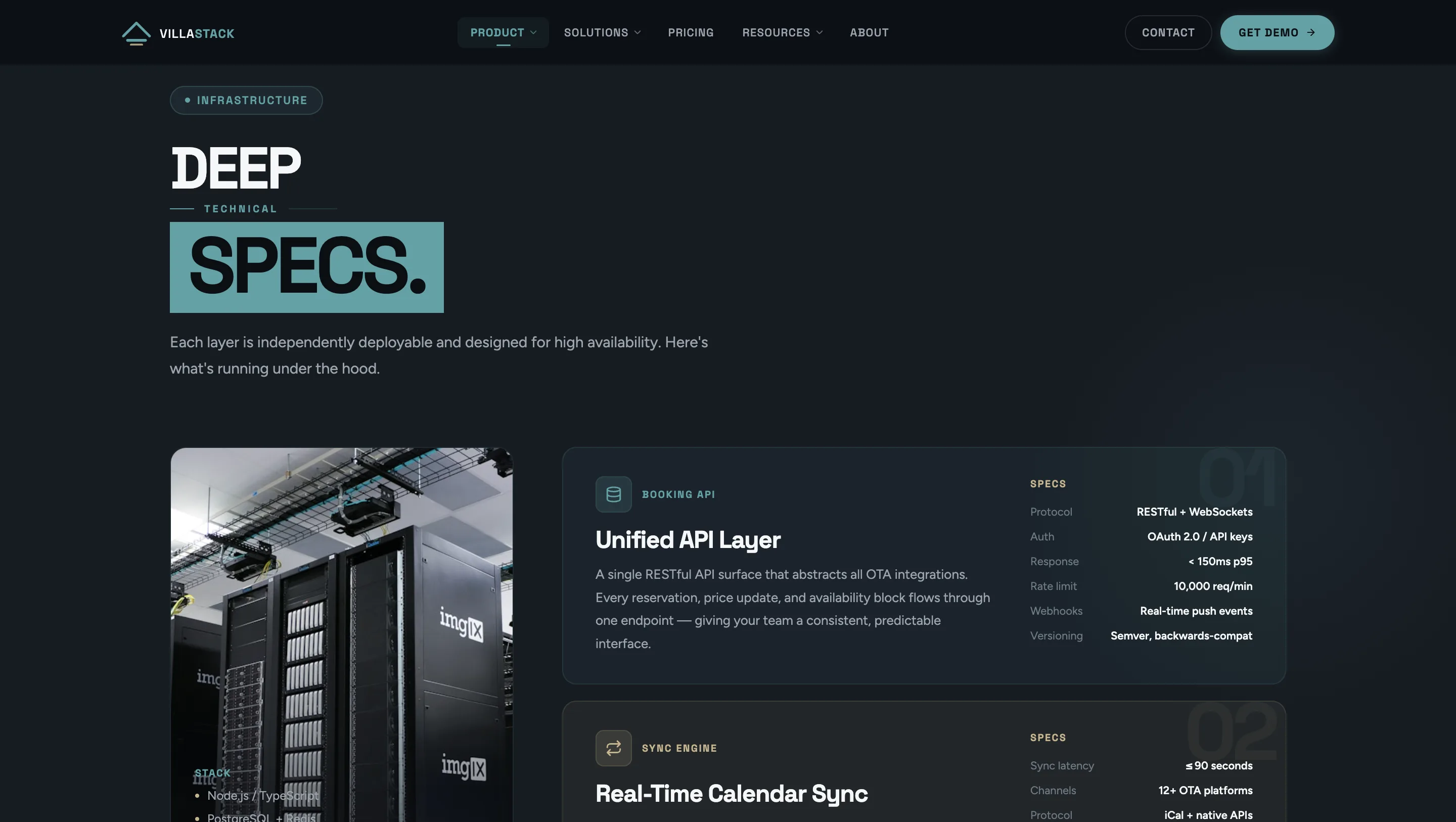
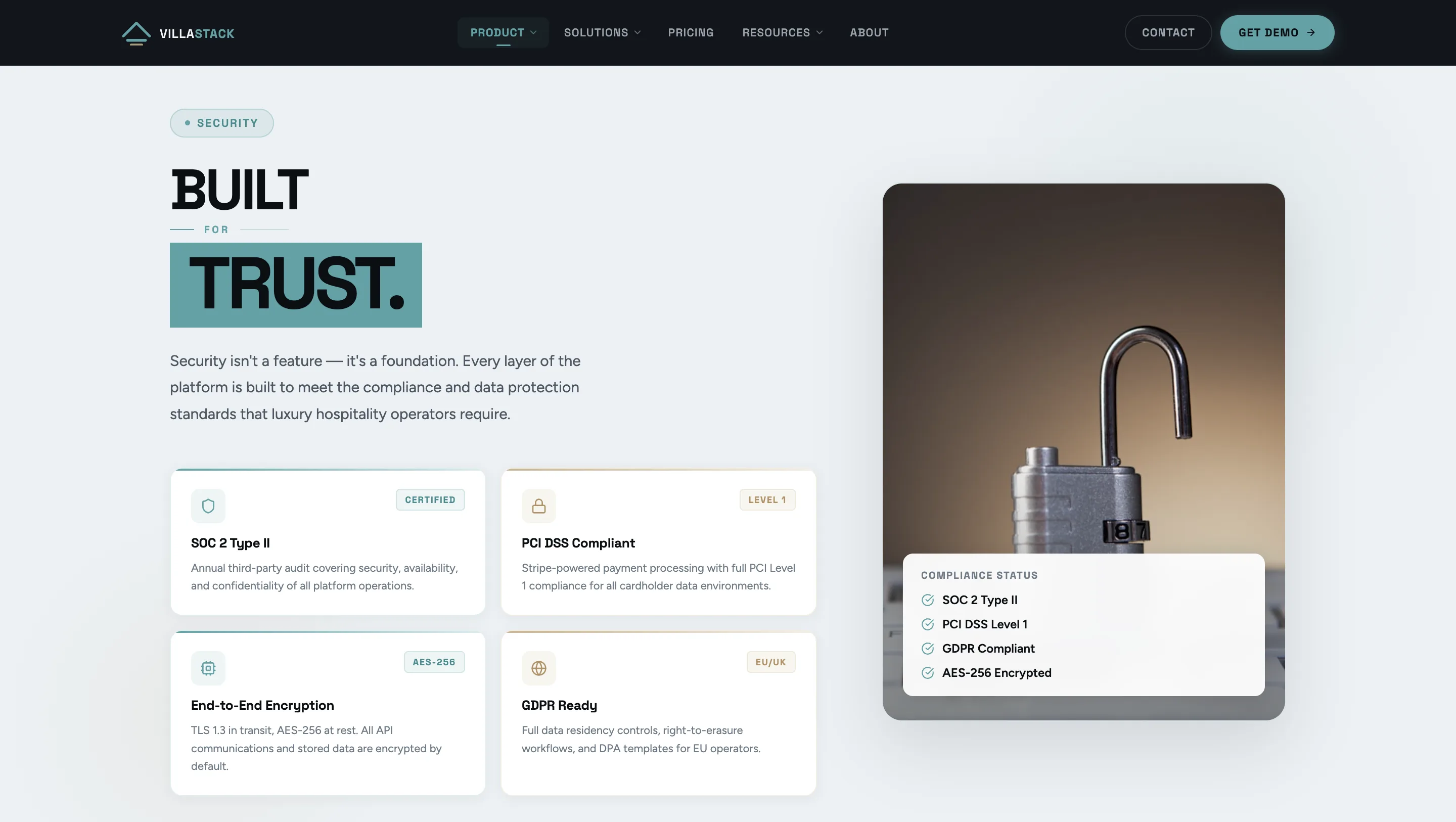
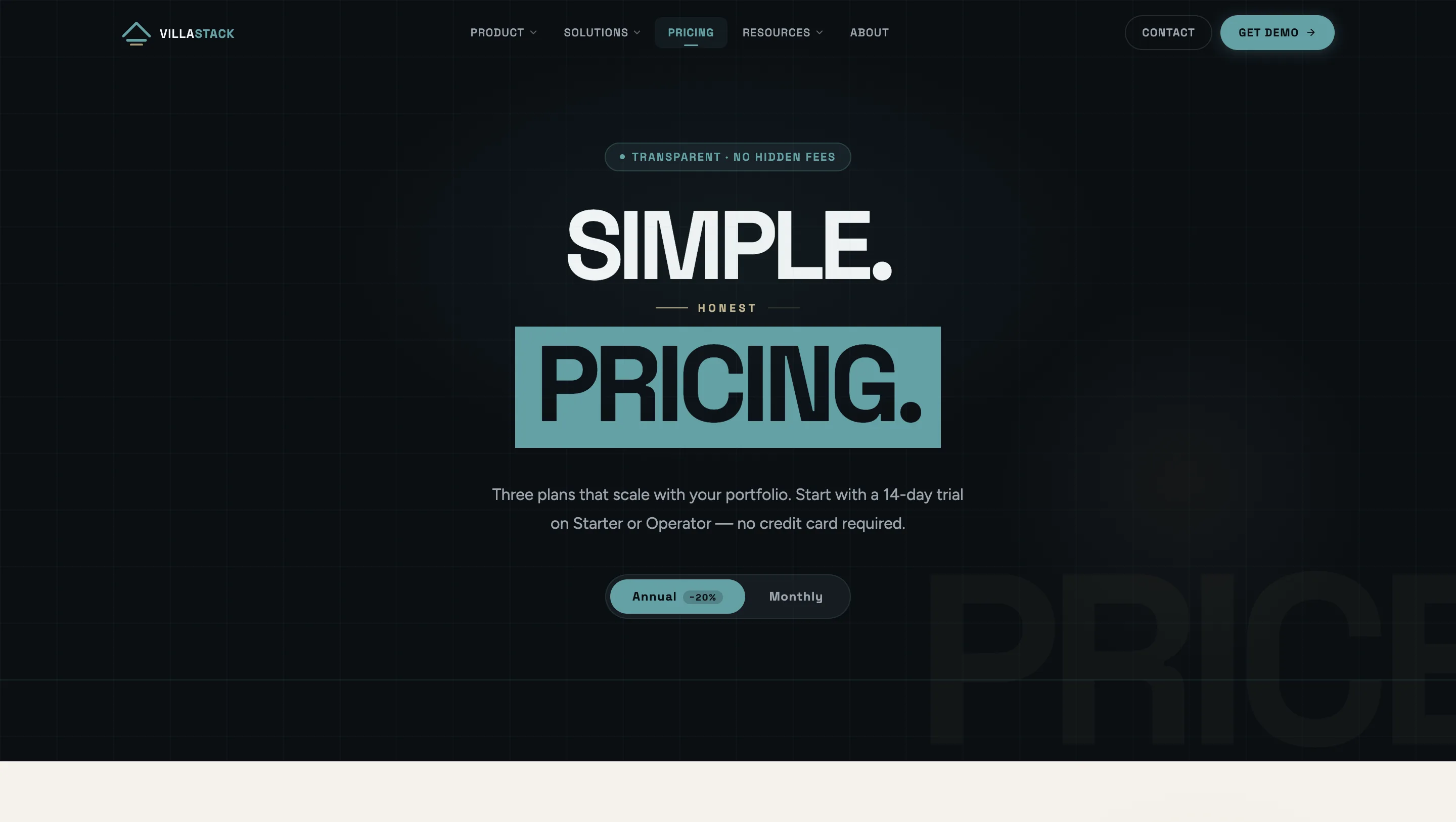
The architecture is designed around these integration points — roughly 22+ industry tools across channels, payments, communication, calendars, PMS and analytics via standard APIs. None is implemented in production.
OTA Platforms (could connect to)
Airbnb · Booking.com · Vrbo · Agoda · Expedia · TripAdvisor
Payments (could connect to)
Stripe · Wise · PayPal
Communication (could connect to)
WhatsApp · SendGrid · Twilio
Calendar (could connect to)
Google Calendar · iCal · Outlook
Property Management (could connect to)
Opera PMS · Cloudbeds · Guesty · Lodgify
Analytics (could connect to)
Google Analytics · Looker Studio · Datadog
Technology Stack
- Prototype stack used to assemble this study: React + TypeScript
- Prototype stack used to assemble this study: Vite
- Prototype stack used to assemble this study: Tailwind CSS v4
- Prototype stack used to assemble this study: Framer Motion
- Prototype stack used to assemble this study: React Router v7
Platform Structure
The information architecture is built for product discovery and feature exploration. Illustrative only.
Core Pages (concept)
Home · Platform · Pricing · Integrations · About
Feature Pages (concept)
Booking Engine · Channel Manager · Dynamic Pricing · Guest Communication · Operations Dashboard · Payments
Solutions (concept)
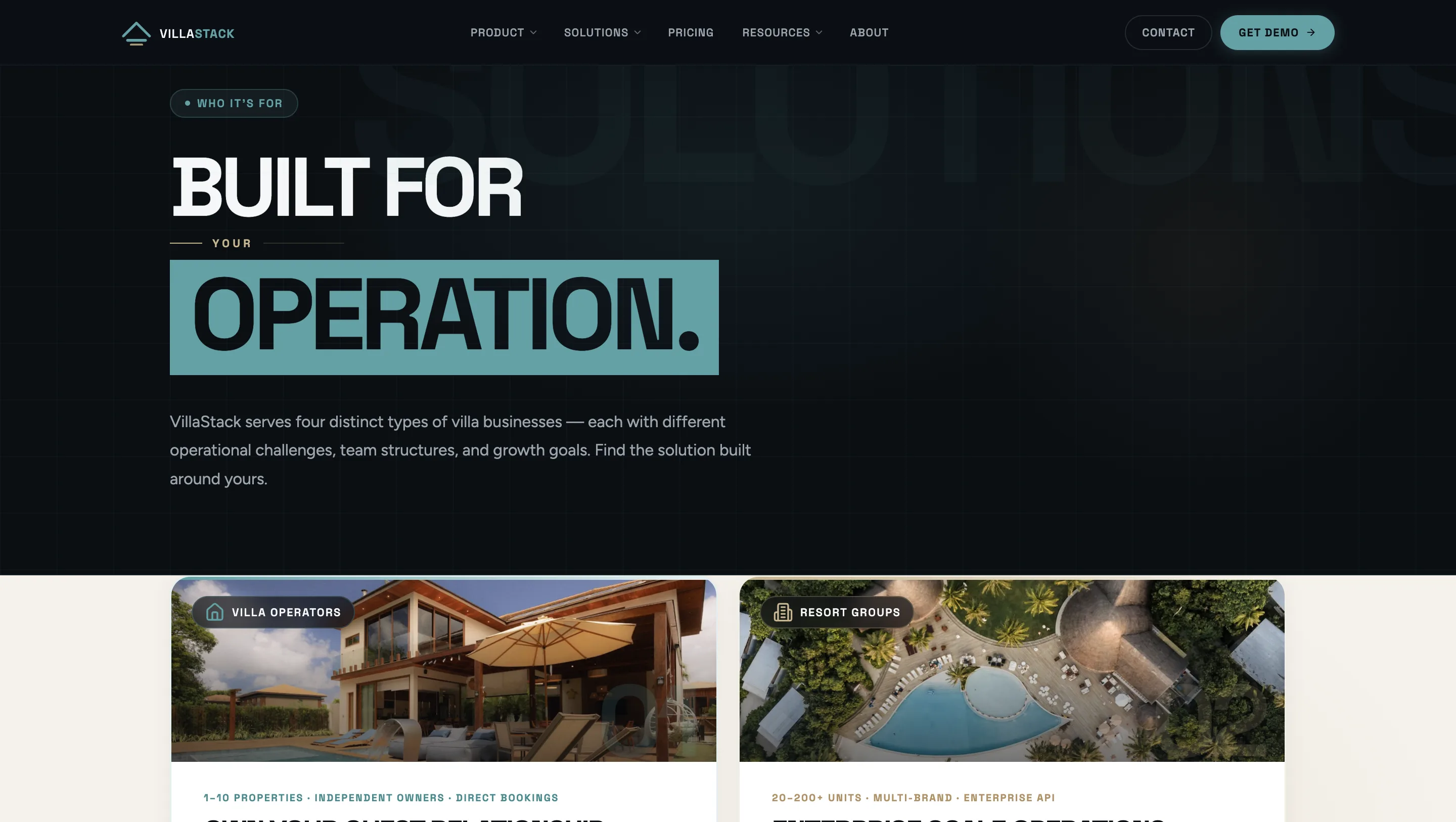
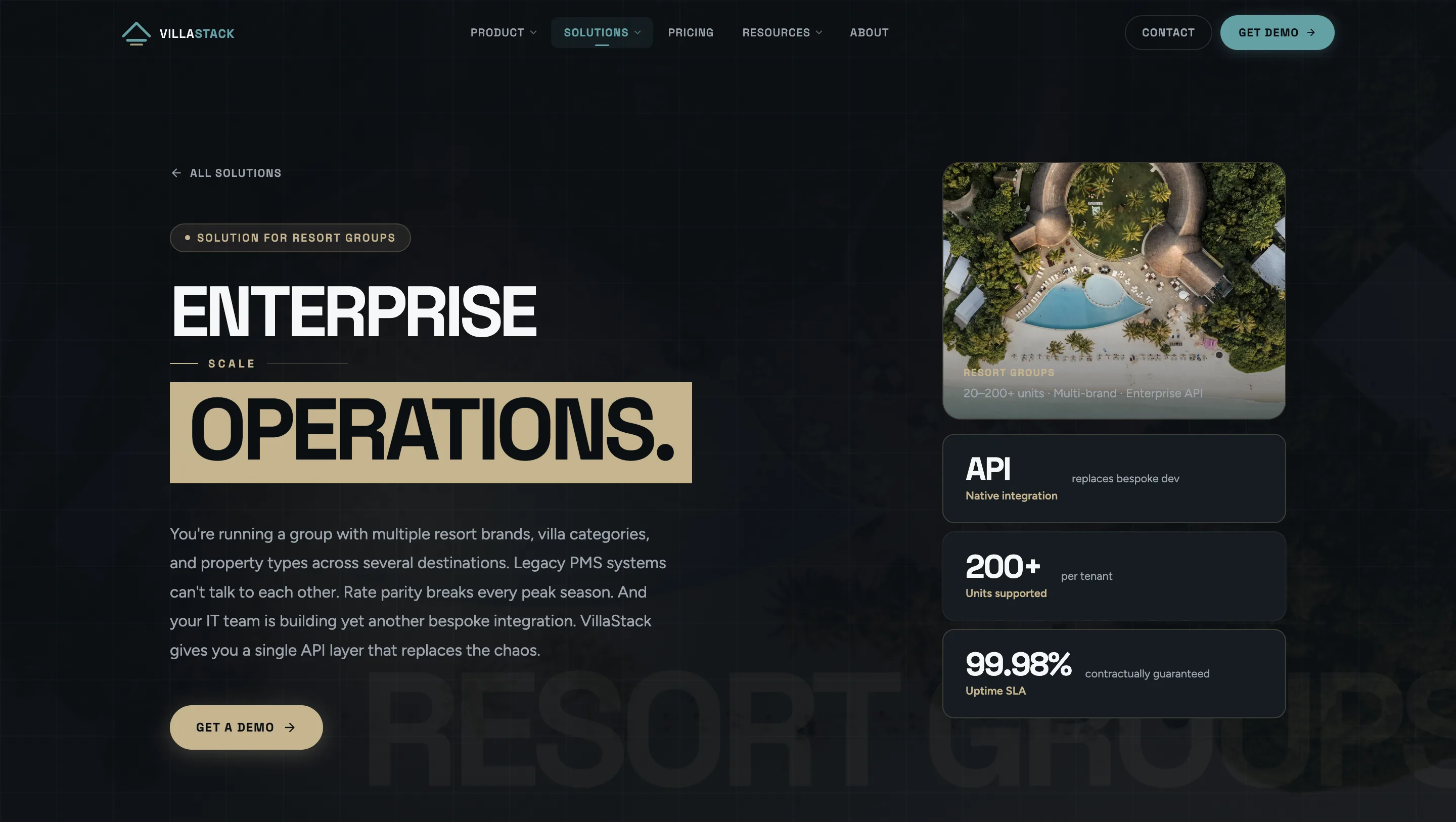
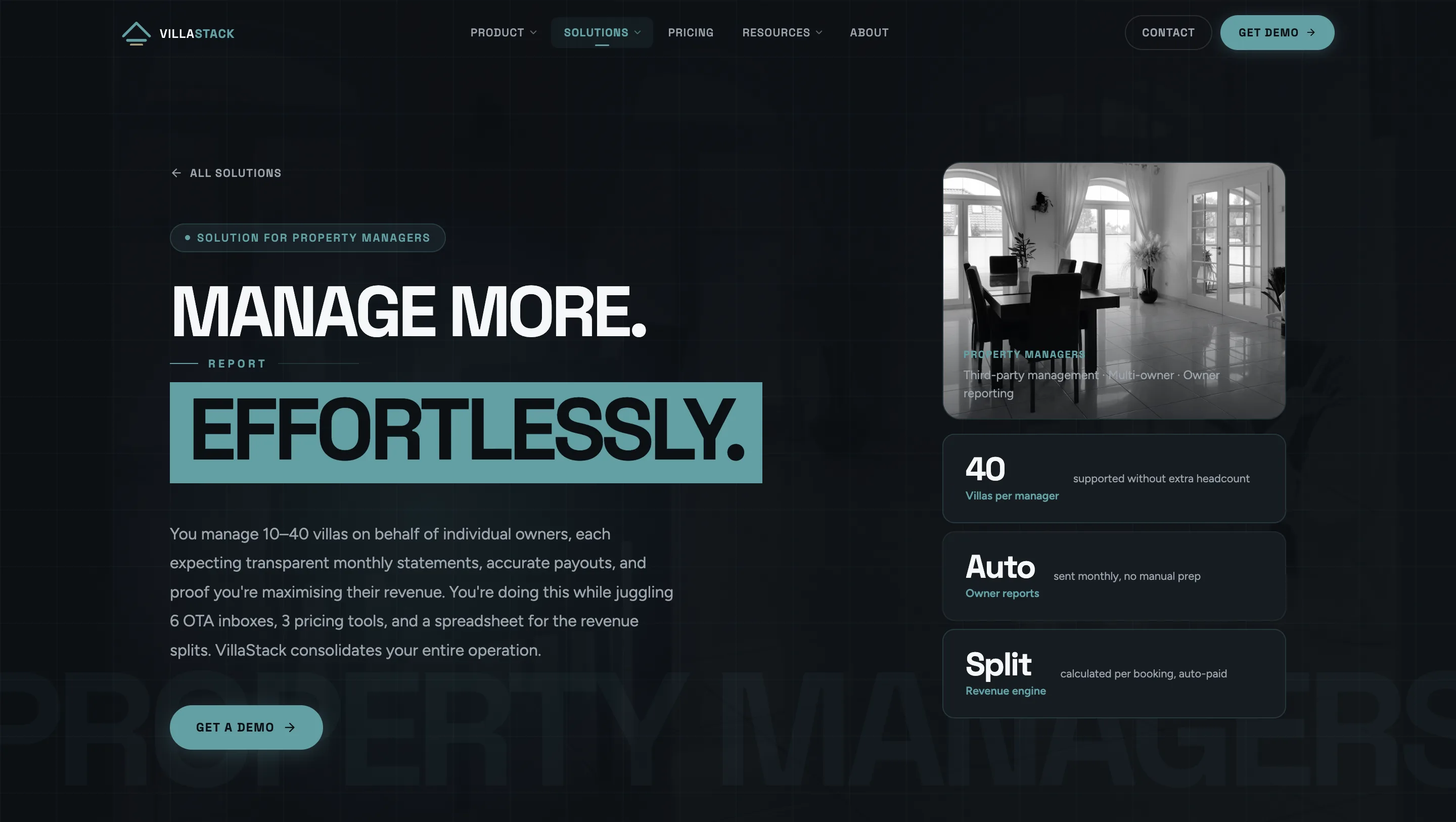
Villa Operators · Resort Groups · Property Managers · Portfolio Investors
Content Layer (concept)
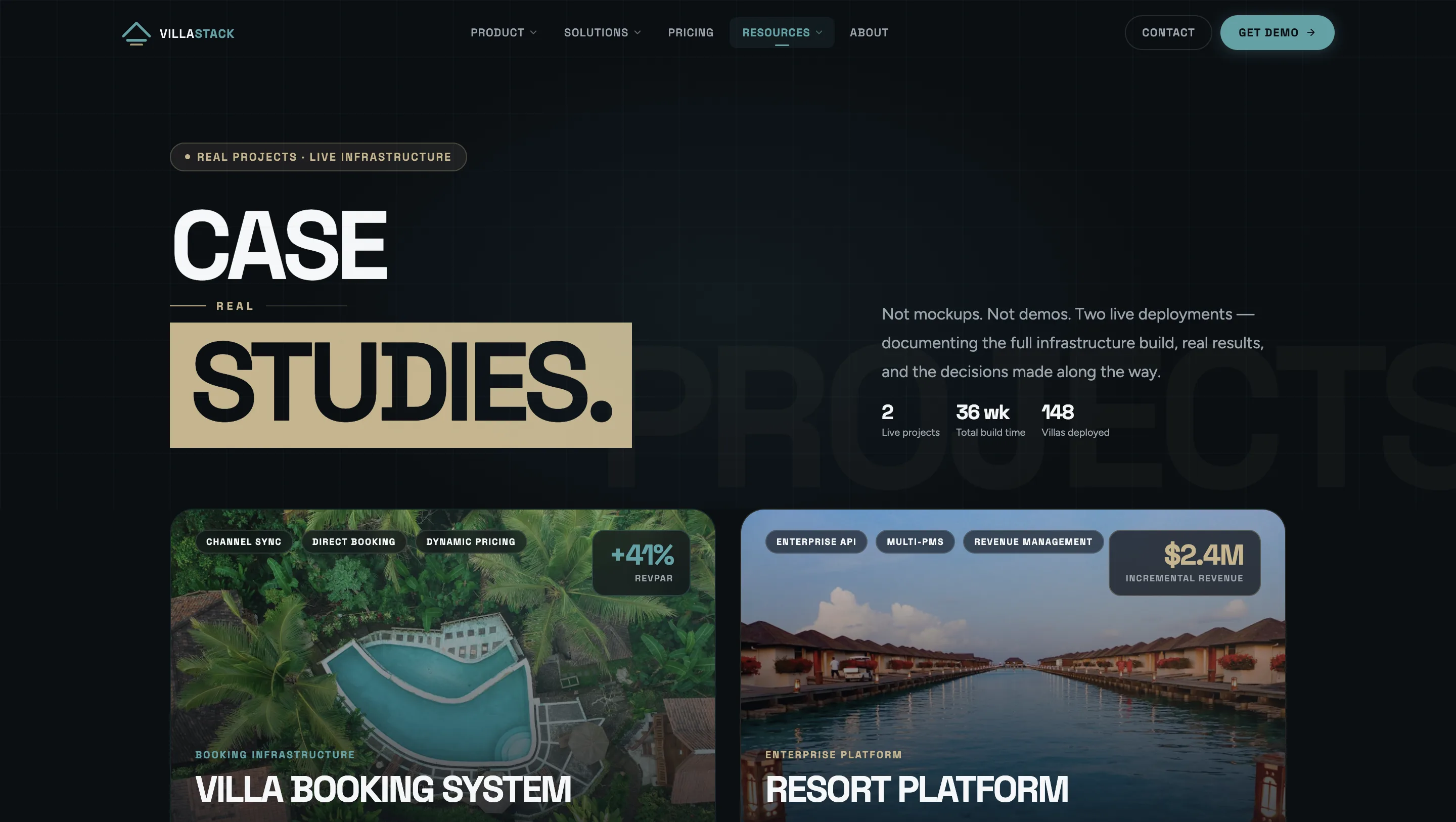
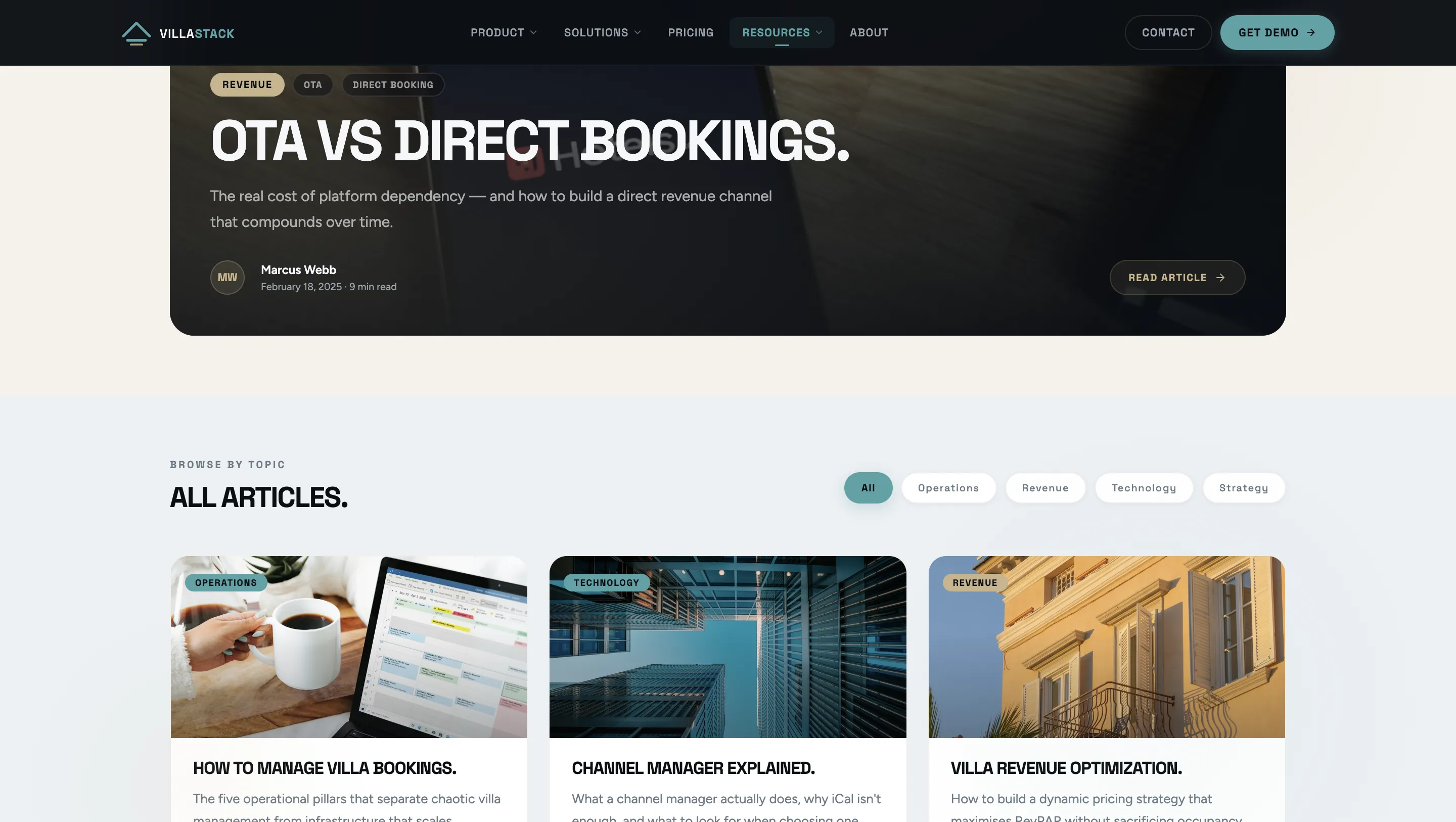
Blog · Case Studies
Why a VillaStack-Style Concept Matters
Luxury villa portfolios need operating infrastructure that traditional booking tools simply don't provide. Concept-build note: this is an internal studio study, not a delivered project. Real engagements of similar scope are scoped, priced and delivered separately.
- Reduced OTA dependency by design
- A growth path for direct bookings
- Operational workflows automated instead of babysat
- Room to scale from a few properties to a full portfolio
Discuss a Similar Build
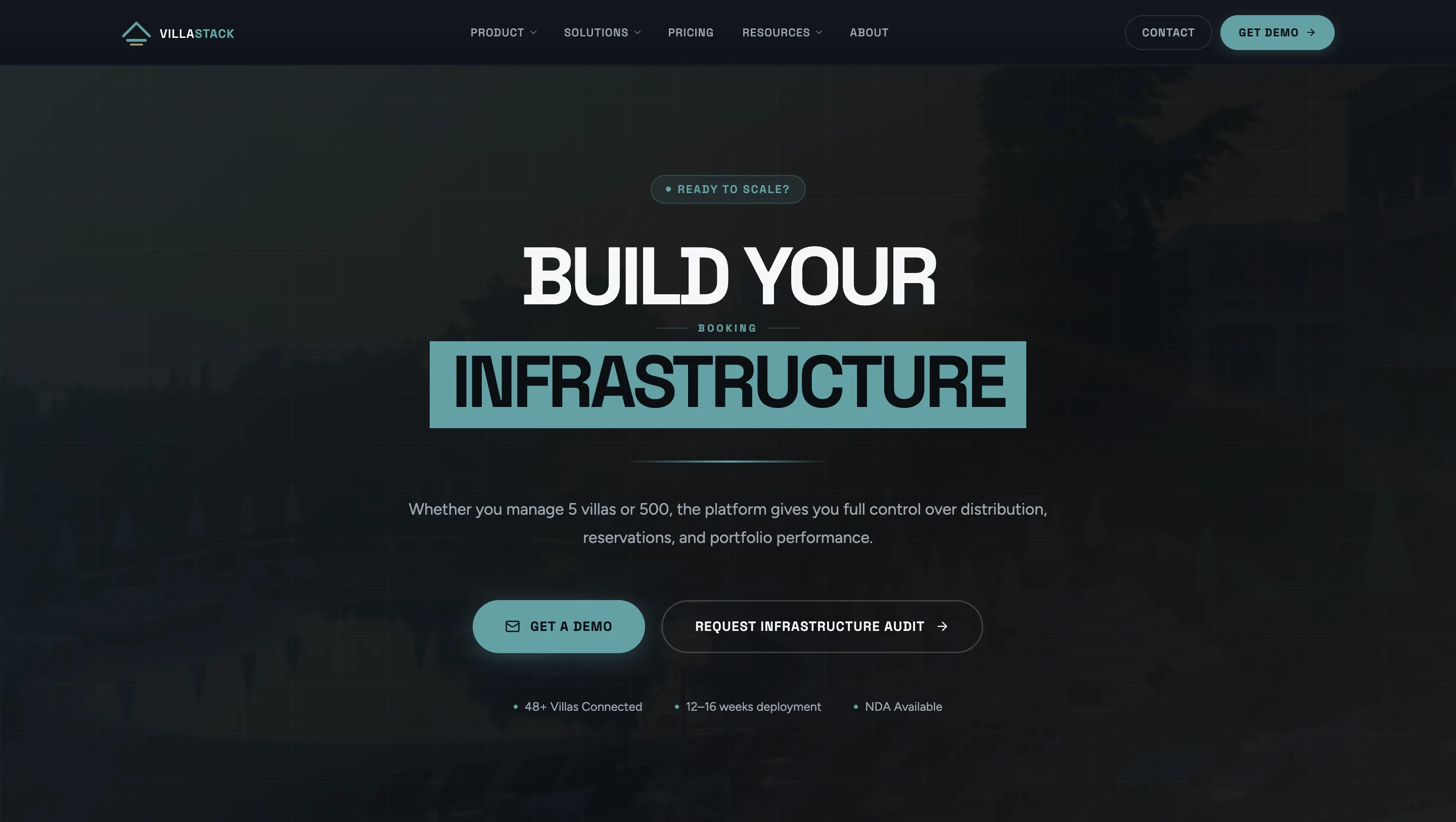
The VillaStack study is production-shaped and illustrative. A real engagement for villa portfolio or boutique resort operators — five properties or five hundred — is scoped, priced and delivered separately.
VillaStack Reference Build Gallery (Illustrative)